ou have been browsing Copart and IAAI for weeks. You see a 2019 Toyota Camry with minor front-end damage. The bidding starts at just $1,500. A similar car with a clean title would cost $6,000 or more. Your heart races. Is this the deal you have been waiting for?
Then you notice two small words in the listing: SALVAGE TITLE.
What does that actually mean? Can you drive this car in Nigeria? Will Customs charge you more or less? Is there hidden damage that the auction photos do not show? And why is the price so low?
These are the right questions to ask. And the answers could save you millions of naira.
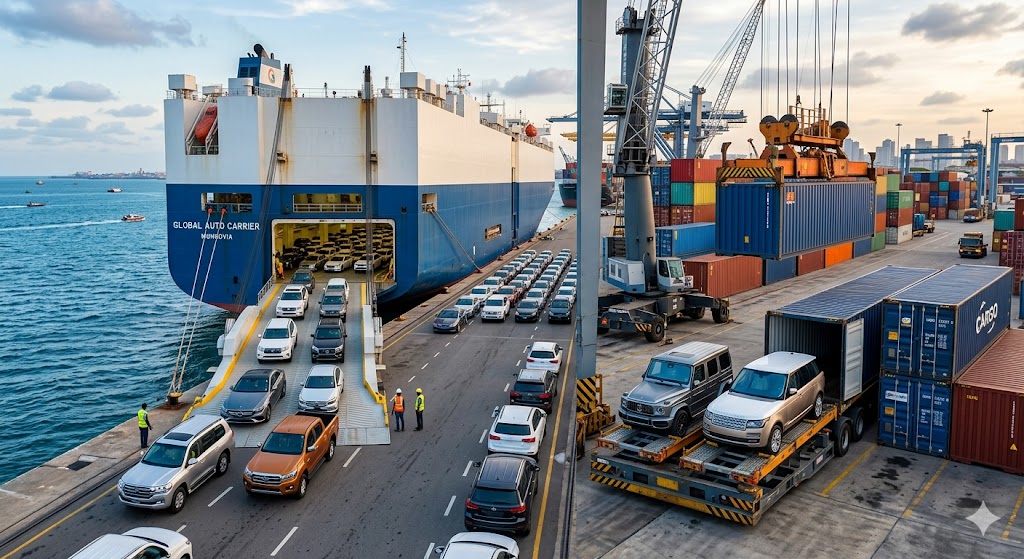
In 2024 alone, Nigeria imported $536 million worth of passenger vehicles from the United States . A substantial portion of these vehicles had salvage titles—meaning they were declared total losses by US insurance companies before being shipped to Lagos, repaired, and sold as “Tokunbo.”
The salvage title trade is not inherently bad. Many Nigerian importers have built successful businesses restoring salvage vehicles. But salvage titles come with significant risks that every buyer must understand: structural damage, flood-damaged electrical systems, title laundering through low-documentation states, and hidden accident histories that do not appear in basic checks.
This guide provides a comprehensive, authoritative explanation of salvage titles specifically for Nigerian importers. You will learn what a salvage title legally means, how to spot repairable damage versus deal-breaking damage, how title laundering works, and why flood-damaged vehicles from hurricane states are the most dangerous salvage purchase you can make.
By the conclusion of this guide, you will be equipped to evaluate salvage vehicles with professional judgment—and avoid the costly mistakes that plague first-time importers.
What Is a Salvage Title? The Legal Definition
A salvage title is a legal designation issued by a US state’s Department of Motor Vehicles (DMV) indicating that a vehicle has been declared a total loss by an insurance company .
How a Vehicle Becomes Salvage
The process typically follows this sequence:
- A vehicle is involved in an accident, flood, fire, or theft
- The owner files a claim with their insurance company
- The insurance company assesses repair costs
- If repair costs exceed a certain percentage of the vehicle’s pre-accident value (typically 75-100%, varying by state), the insurer declares it a “total loss”
- The insurer pays the owner the vehicle’s actual cash value
- The insurer takes ownership of the damaged vehicle
- The insurer applies to the state DMV for a salvage title
- The state issues a salvage title, branding the vehicle’s history permanently
As one expert explained: “Over there abroad, the cost of salvaged or accidented vehicles is very cheap compared to the cost of new vehicles. They abandon or label a vehicle accidented once the door, boot, or windscreen is damaged. The engine will still be working perfectly” .
The Economics of Salvage
Why do insurance companies total vehicles that appear repairable? The answer is labor costs. In the United States, auto body labor rates range from $80 to $150 per hour . A repair that costs $8,000 in the US might cost only ₦500,000 (approximately $330) in Nigeria . This discrepancy creates the arbitrage opportunity that Nigerian importers exploit.
| Cost Component | United States | Nigeria |
|---|---|---|
| Labor per hour | $80-150 | ₦3,000-5,000 (~$2-3) |
| Door replacement | $500-1,000 | ₦80,000-150,000 (~$50-100) |
| Complete respray | $3,000-5,000 | ₦200,000-400,000 (~$130-260) |
| Front end rebuild | $2,000-4,000 | ₦150,000-300,000 (~$100-200) |
A vehicle that is “totaled” in the US may be a perfectly viable repair project in Nigeria.
Legal Status of Salvage Vehicles in the US
Salvage title vehicles cannot be legally driven on US public roads in their damaged state . They are not permitted for road use because they have not passed safety inspections. To become road-legal in the US, a salvage vehicle must be repaired, pass a rigorous inspection, and be issued a rebuilt title.
For export to Nigeria, the salvage title is sufficient. Nigeria does not require a rebuilt title for importation. However, the salvage brand remains on the vehicle’s permanent history record, which can be discovered through VIN checks .
Salvage vs Clean Title: The Critical Differences
| Feature | Clean Title | Salvage Title |
|---|---|---|
| Insurance history | Never declared total loss | Declared total loss by insurer |
| Accident history | No major accidents (minor possible) | At least one major incident |
| US road legality | Fully legal | NOT legal to drive in damaged state |
| Nigerian import | Fully legal | Fully legal after repair |
| Auction price | $6,000-12,000 | $500-3,500 |
| Customs duty (Nigeria) | Full assessment | Rebate of 40-60% possible |
| Repair cost (Nigeria) | Minimal | ₦300,000-1,500,000 |
| Resale value (Nigeria) | Highest | Good (after quality repair) |
| Risk level | Low | Medium-High |
| VIN history transparency | Clean record | Branded record |
The Financial Trade-Off
Clean title example : Purchase $7,000 + shipping $1,500 + duty ~₦8 million = total ~₦21-24 million
Salvage title example : Purchase $2,000 + shipping $1,500 + repair ₦800,000 + duty (reduced) ~₦4 million = total ~₦13-15 million
Potential saving with salvage : ₦6-10 million
However—and this is a critical however—this saving assumes the salvage vehicle does NOT have hidden problems like flood damage, frame damage, or title laundering issues .
Types of Salvage Vehicles: What Nigerian Importers Need to Know
Not all salvage vehicles are equal. Understanding the specific cause of the salvage brand is essential.
Salvage by Accident (Most Common)
| Damage Type | Repairability | Recommendation |
|---|---|---|
| Front end damage (non-structural) | High — replace bumper, grille, lights, radiator support | Suitable |
| Rear end damage (non-structural) | High — replace bumper, tail lights, trunk lid | Suitable |
| Side damage (surface only) | High — replace doors, panels | Suitable |
| Frame/structural damage | Low — compromises safety, expensive to repair | Avoid |
| Engine damage | Low — repair costs may exceed vehicle value | Avoid |
| Suspension damage | Medium — can indicate frame damage | Caution |
Salvage by Flood (Most Dangerous)
Flood-damaged salvage vehicles are the most common source of post-import problems for Nigerian buyers. After major hurricanes (Ian in 2022, Helene and Milton in 2024), thousands of flood-damaged vehicles enter the auction pipeline.
Why flood damage is dangerous :
- Electrical problems may not appear immediately
- Corrosion continues over time
- Mold and mildew affect interior health
- Safety systems (airbags, ABS) may fail unpredictably
- Nigerian humidity exacerbates existing water damage
The trap: Flood vehicles are often dried out, detailed, and sold with cosmetic-only repairs. The electrical problems emerge months later, when the importer has already paid shipping, duties, and registration.
How to detect flood damage :
- Check the Copart sale date against hurricane declarations. If sold within 30 days after a named hurricane (Ian, Helene, Milton), assume flood damage until proven otherwise
- Run a NMVTIS-based VIN report that includes flood title brands
- Look for musty odors or discolored carpet in auction photos
Salvage by Theft Recovery
A vehicle stolen and later recovered may receive a salvage title if the insurance company paid the owner for the loss. Theft-recovery salvage vehicles often have minimal damage—sometimes just a broken window or damaged ignition.
| Feature | Assessment |
|---|---|
| Damage extent | Usually minimal |
| Mechanical condition | Often excellent |
| Risk level | Low |
| Suitability for Nigeria | Highly suitable — often the best salvage value |
Note: Always check for electrical damage (cut wiring) and ensure the title is not “junk” or “non-repairable.”
Salvage by Fire
Fire-damaged vehicles are almost never worth importing. Fire compromises wiring, plastics, seals, and structural metal. Even after repair, hidden problems persist.
Recommendation: Avoid fire-damaged salvage vehicles entirely .
Salvage by Hail
Hail-damaged vehicles have cosmetic dents but no mechanical or structural compromise. These are often excellent values for Nigerian importers, as skilled panel beaters can perform paintless dent repair (PDR) at reasonable cost .
Recommendation: Highly suitable — hail damage is purely cosmetic and does not affect drivability.
Title Laundering: How “Clean” Salvage Cars Get Sold to Nigerian Buyers
This is one of the most important—and least understood—risks for Nigerian importers.
What Is Title Laundering?
Title laundering is the practice of moving a salvage-titled vehicle through a state that does not carry the salvage brand forward on export titles, making it appear to have a “clean” title .
How It Works
- A vehicle receives a salvage brand in Florida after a hurricane
- The vehicle is shipped to Oklahoma, Kentucky, Texas, or Georgia
- These states issue a new title without the salvage brand for export vehicles
- The vehicle is sold to a Nigerian importer as “clean title”
- The importer pays a premium for what they believe is a clean vehicle
- Months later, the hidden flood or accident damage reveals itself
As one expert explained: “Copart destination codes steer vehicles toward low-documentation resale. Nigerian buyers prefer these routes because they avoid stricter title rules, but they are also the most common laundering paths for disaster-state vehicles” .
States Known for Title Laundering
| State | Practice | Risk Level |
|---|---|---|
| Oklahoma | Re-issues titles without salvage brand for export | High |
| Kentucky | Similar to Oklahoma | High |
| Texas | May not carry salvage brand forward | Medium-High |
| Georgia | Lax title documentation requirements | High |
How to Detect Laundered Titles
The only reliable defense is NMVTIS-based VIN verification. NMVTIS (National Motor Vehicle Title Information System) is the official US government database that retains original title brands regardless of state re-issuance .
What NMVTIS reveals :
- Original salvage brand from Florida (even after re-titling in Oklahoma)
- Complete title brand chain across all states
- Flood, salvage, and junk brands that laundering attempts to hide
Cost: As low as $4.99 for a NMVTIS-based report .
The Danger of Destination Code “NG” or “CO”
Copart uses destination codes to route vehicles to specific markets. Vehicles with destination code “NG” (Nigeria) or “CO” (Colombia) are destined for export to these countries .
While convenient, these routes are also the most common laundering paths for disaster-state vehicles. As one expert warned: “These routes are also the most common laundering paths for disaster-state vehicles. The NMVTIS report catches the original disaster-state title brand that the re-title process may have erased” .
Recommendation: Always run a VIN report on any vehicle destined for Nigeria—especially those pre-routed for export.
The True Cost of Importing a Salvage Vehicle to Nigeria
Purchase and Shipping Costs
| Component | Low Estimate | High Estimate |
|---|---|---|
| Winning bid (salvage) | $800 | $3,500 |
| Auction fees (10-20%) | $80 | $700 |
| Inland trucking | $300 | $600 |
| Ocean freight (RoRo) | $1,200 | $1,650 |
| Subtotal (USD) | $2,380 | $6,450 |
| Subtotal (₦ at ₦1,550) | ₦3,689,000 | ₦9,997,500 |
Customs Duty (With Salvage Rebate)
Salvage vehicles can receive duty rebates of 40-60% compared to clean title vehicles, depending on the degree of damage.
| Assessment | Duty Rate | On CIF of ₦10 million |
|---|---|---|
| Clean title | ~50% of CIF | ₦5,000,000 |
| Salvage (minor damage) | ~30% of CIF | ₦3,000,000 |
| Salvage (major damage) | ~20% of CIF | ₦2,000,000 |
Savings on duty alone: ₦2-3 million .
Repair Costs in Nigeria
| Repair Type | Estimated Cost (₦) |
|---|---|
| Minor front end (bumper, lights, grille) | 150,000 – 300,000 |
| Moderate front end (plus hood, radiator) | 300,000 – 600,000 |
| Rear end damage | 100,000 – 300,000 |
| Door replacement (per door) | 80,000 – 200,000 |
| Complete respray | 200,000 – 600,000 |
| Air conditioning service | 50,000 – 150,000 |
| Frame straightening (if needed) | 300,000 – 800,000 |
Complete Landed Cost Example: Salvage Toyota Camry
| Component | Amount (₦) |
|---|---|
| US purchase + fees + inland | ₦5,000,000 |
| Ocean freight | ₦2,325,000 |
| CIF Value | ₦7,325,000 |
| Customs duty (reduced for salvage) | ₦2,500,000 |
| Clearing agent | ₦300,000 |
| Terminal handling | ₦150,000 |
| Repairs (moderate damage) | ₦500,000 |
| Registration | ₦150,000 |
| Total Landed Cost | ~₦10,925,000 |
Compare to clean title: ~₦22 million. Salvage saved approximately ₦11 million — but required repairs and carries higher risk.
Risk Assessment: Is a Salvage Vehicle Right for You?
When Salvage Makes Sense
| Scenario | Assessment |
|---|---|
| You have access to skilled, trusted mechanics in Nigeria | Good |
| You have experience with bodywork and mechanical repairs | Good |
| The damage is clearly cosmetic (hail, minor front/rear) | Excellent |
| The vehicle is theft recovery with minimal damage | Excellent |
| You are importing for personal use and keeping long-term | Good |
| You have a low budget and high tolerance for risk | Acceptable |
When Salvage Is NOT Worth the Risk
| Scenario | Assessment |
|---|---|
| You are a first-time importer with no repair experience | Avoid |
| The vehicle has flood damage (any) | Avoid |
| The vehicle has frame/structural damage | Avoid |
| You cannot inspect the vehicle in person or through trusted agent | Caution |
| You plan to resell quickly to informed buyers | Caution |
| The VIN report shows title laundering through OK/KY/TX/GA | Investigate |
The Expert’s Rule of Thumb
Veteran automobile dealer Iyke Onyeka categorizes accident vehicles into two distinct types :
| Category | Description | Recommendation |
|---|---|---|
| Minor Accident | Damage to non-critical components that do not affect usability (headlamp, bonnet, bumper, doors) | Suitable for import |
| Major Accident | Damage affecting critical components — structural integrity compromised (chassis, engine, suspension) | Avoid |
As Onyeka explained: “These minor ones that come into the country, you repair them and have a complete car to yourself… Once a car has an accident, whether major or minor, it is cheaper abroad” .
How to Verify a Salvage Title Before Bidding
Step 1: Run a VIN History Report
A basic auction listing is not sufficient. You need a comprehensive report that accesses NMVTIS data .
| Provider | Price | NMVTIS Access | Auction Records | Flood Flags |
|---|---|---|---|---|
| VINInfoHub | $4.99 | ✓ | ✓ (Copart/IAAI) | ✓ |
| CARFAX | $44.99 | ✓ | Limited | ✓ |
| AutoCheck | $29.99 | ✓ | Limited | Limited |
Step 2: Check for These Specific Red Flags
| Red Flag | What to Look For | Action |
|---|---|---|
| Hurricane-date auction | Sold within 30 days after Ian, Helene, or Milton | Do not bid — assume flood damage |
| Oklahoma/Kentucky/Texas/Georgia title | Re-issued in low-documentation state | Check original brand via NMVTIS |
| Destination code NG or CO | Routed for Nigeria/Colombia | Verify original title brand |
| Color mismatch | Color changed between auctions or registrations | Possible accident repair |
| Odometer rollback | Mileage decreases or does not increase plausibly | Do not bid — fraud |
| Lien/Open finance | Vehicle has outstanding loan | Do not bid — cannot transfer |
Step 3: Review Auction Photos Critically
- Look beyond the damage: Inspect the undamaged areas for signs of poor maintenance
- Check the interior: Look for musty odors (flood), excessive wear (high mileage)
- Look under the hood: Check for rust, corrosion, or non-original parts
- Check the airbags: Deployed airbags require expensive replacement ($1,000-3,000)
Step 4: Verify Run and Drive Status
Copart and IAAI label vehicles as:
- Run and Drive: Vehicle started and moved under own power at listing time
- Starts: Vehicle started but may not drive
- Not Specified / Unknown: Condition unknown
For salvage imports, Run and Drive status is strongly preferred . However, be aware that a vehicle listed as “Run and Drive” when photographed may not start weeks later due to battery drain or fuel degradation .
The Truth About Copart Condition Reports
What Condition Reports Tell You
Copart condition reports provide:
- Damage photos (multiple angles)
- Run and drive status
- Primary damage description (front, rear, side, flood, etc.)
- Odometer reading (reported, not guaranteed)
- Title type (salvage, clean, etc.)
What Condition Reports Do NOT Tell You
- Structural integrity: Frame damage may not be visible in photos
- Electrical system health: Flood damage may not be evident
- Engine condition: “Run and Drive” does not guarantee engine health
- Hidden accident damage: Previous repairs may be concealed
The Flood Damage Blind Spot
Condition reports for flood-damaged vehicles often list “Water/Flood” as the primary damage. However, this is not always the case. Vehicles that have been dried out and moved between states may have the flood brand removed from the visible listing while NMVTIS retains the original brand .
The only reliable flood detection: NMVTIS-based VIN history report + cross-reference with hurricane dates .
Salvage Titles and Nigerian Customs: Duty Advantages
How Damage Affects Customs Valuation
When assessing a salvage vehicle, Nigerian Customs considers the degree of damage. According to freight forwarding experts, accidented vehicles can receive rebates of 40-60% compared to clean-title vehicles .
The key: “When you are doing your assessment, you have to state the position of the vehicle, the state of the vehicle, so as to justify the value that you are actually putting on it” .
Documentation for Lower Valuation
To secure a duty rebate, you need:
- Auction condition report showing damage extent
- Commercial invoice with “Salvage” or “Accidented” clearly stated
- Photos of damage (from auction listing)
- VIN report confirming salvage brand
The Trade-Off
| Factor | Clean Title | Salvage Title |
|---|---|---|
| Duty rate | Full (~50% of CIF) | Reduced (~20-35% of CIF) |
| Documentation needed | Basic | Extensive (damage proof) |
| Risk of valuation dispute | Low | Medium |
| Potential duty savings | — | ₦2-4 million |
Case Study: Salvage Import Gone Right
Vehicle: 2018 Toyota Camry
Salvage reason: Front end collision — damaged bumper, grille, headlights, radiator support, hood
Purchase price: $2,200 at Copart
Damage assessment: No frame damage, engine intact, airbags not deployed
Repair cost in Nigeria: ₦550,000 (parts from Ladipo + skilled mechanic)
Total landed cost: ~₦11.5 million
Market value after repair: ~₦16-18 million
Net saving: ~₦5 million compared to clean title
Time to repair: 3 weeks
Key success factors:
- Verified no frame damage before bidding
- Run and drive confirmed at auction
- Used trusted mechanic with salvage experience
- Purchased quality replacement parts
- Documented damage for customs rebate
Case Study: Salvage Import Gone Wrong
Vehicle: 2019 Honda Accord
Salvage reason: “Water/Flood” listed on IAAI
Purchase price: $1,800 (seemed like bargain)
Repair cost in Nigeria: ₦1,200,000 (replaced multiple electrical components — repeatedly)
Problem: Electrical failures continued after delivery — windows stopped working, dashboard lights flickered, AC failed
Total landed cost including endless repairs: ~₦15 million
Market value after repair: ~₦14 million (buyers suspicious of electrical issues)
Net loss: ~₦1 million plus months of frustration
Prevention: VIN check would have shown flood brand; cross-reference with hurricane dates would have shown it was from Florida after Hurricane Ian. A $5 VIN report would have saved millions.
Frequently Asked Questions
Can a salvage car be registered in Nigeria?
Yes. Salvage vehicles can be legally imported, registered, and driven in Nigeria. However, you must complete repairs before registration, as the vehicle will be inspected by the VIS centre.
How much does salvage car insurance cost in Nigeria?
Insurance companies generally do not distinguish between salvage and clean title vehicles in Nigeria, as the official registration documents do not carry the salvage brand. However, if the insurer discovers the salvage history, they may adjust premiums or coverage.
What is the difference between salvage and rebuilt title?
Salvage means the vehicle was declared a total loss but has not been repaired. Rebuilt means the vehicle was repaired and passed inspection in the US. For Nigerian imports, salvage title is sufficient — rebuilt is not required.
Why do US salvage cars have high mileage sometimes?
Many salvage vehicles are high-mileage because American owners drive extensively. High mileage is not necessarily a problem if the vehicle was well-maintained. However, always verify odometer readings through VIN reports to rule out rollback.
How do I avoid buying a flood salvage car from Nigeria?
- Run a NMVTIS-based VIN report ($4.99-44.99)
- Check the Copart sale date against hurricane declarations
- Be suspicious of destination code “NG” or “CO” listings
- Avoid vehicles from Florida, Louisiana, Texas after hurricane seasons
- Look for musty odors or water stains in auction interior photos
Can Autoriva help me evaluate salvage vehicles?
Yes. Autoriva provides VIN verification, damage assessment, and bidding representation for salvage vehicles. We help clients identify repairable damage and avoid flood-damaged or frame-damaged vehicles.
Conclusion
Salvage titles are not inherently bad. Thousands of Nigerian importers have successfully restored salvage vehicles and driven them for years with no problems. The financial advantages are real: savings of ₦6-10 million compared to clean title imports.
However, salvage vehicles come with significant risks that every buyer must understand:
- Flood-damaged vehicles from hurricane states are the most dangerous. Electrical problems emerge months later, when repair is difficult and expensive. Avoid them entirely.
- Title laundering through Oklahoma, Kentucky, Texas, and Georgia can make a salvage vehicle appear clean. Only NMVTIS-based VIN verification catches the original brand.
- Frame and structural damage compromise vehicle safety and are expensive to repair properly in Nigeria. Avoid these unless you are an experienced rebuilder.
- Run and drive status is critical for RoRo shipping and assessing mechanical condition.
The keys to successful salvage importation are:
- Verify before bidding — Run a NMVTIS-based VIN report (as low as $4.99)
- Avoid flood and frame damage — These are deal-breakers
- Prefer minor, cosmetic damage — Hail, front/rear (non-structural), theft recovery
- Document damage for customs — To secure duty rebate
- Work with trusted mechanics — Skilled Nigerian repair is your advantage
For importers who prefer to delegate the complexity of salvage vehicle evaluation to experienced professionals, Autoriva provides VIN verification, damage assessment, bidding representation, shipping coordination, and customs clearance.
Ready to evaluate a salvage vehicle with confidence? Contact Autoriva today for a pre-bid VIN check and damage assessment. A $5 report could save you millions in hidden repairs.