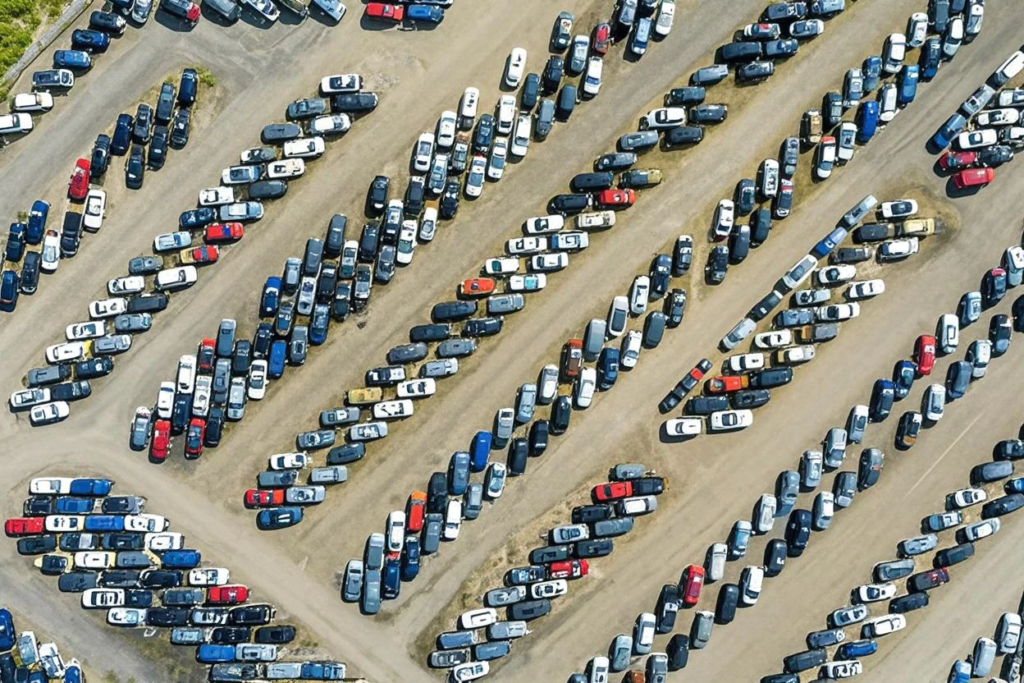
For Nigerian car importers, Insurance Auto Auctions Inc. (IAAI, now operating as IAA) represents one of the most accessible and inventory-rich auction platforms in the United States. Alongside Copart, IAAI provides thousands of vehicles daily—sedans, SUVs, trucks, motorcycles, and commercial vehicles—available to international buyers willing to navigate the auction and shipping process .
The platform’s popularity among Nigerian buyers stems from three factors: competitive wholesale pricing, transparent vehicle condition reporting, and established export pathways to Lagos. However, the gap between winning an auction and seeing your vehicle on Nigerian roads requires careful planning across multiple stages—registration, bidding, payment, transportation, ocean freight, documentation, customs clearance, and registration.
This guide provides a comprehensive, step-by-step roadmap for buying cars from IAAI and importing them to Nigeria. You will learn how to register as an international buyer, understand IAAI’s fee structure, identify vehicles suitable for Nigerian import, calculate total landed costs, make payments from Nigeria, arrange shipping via RoRo or container, and manage customs clearance at Apapa or Tin Can Island Port.
By the conclusion of this guide, you will have a complete understanding of the process—whether you choose to manage it independently or engage a professional service like Autoriva.
IAAI vs Copart: Understanding the Difference
Before examining the detailed process, it is important to understand how IAAI compares to Copart, as the two platforms are the dominant players in the US vehicle auction market.
| Feature | IAAI (IAA) | Copart |
|---|---|---|
| Membership fee | $200 annually (public or licensed business) | $99 basic or $249 premier |
| Bid limit | Based on account type and deposit | $2,000 limit on basic membership |
| International support | Official Market Alliance partner in Nigeria (Boacon Autos) | Direct international registration |
| Vehicle inventory | Approximately 300,000+ vehicles daily | Larger inventory, more locations |
| Fee structure | Buyer fees based on bid price tier | Flat percentage (typically 10–20%) |
| Reneging penalty | $1,000 or 15% of sale price (whichever is greater) | 10% or $600 (whichever is higher) |
IAAI’s $200 annual membership fee applies to both individual (public) and licensed business accounts . This gives you access to bid on vehicles across their US locations, with the ability to view full VIN numbers, create watch lists, and participate in auctions open to the public.
For Nigerian buyers, IAAI has established an official Market Alliance partnership with Boacon Autos in Nigeria, providing local support for the import process . This partnership acknowledges the significant volume of vehicles flowing from IAAI to Nigerian buyers.
Understanding IAAI Membership Options for Nigerian Buyers
IAAI offers two primary account types for international buyers: Public (individual) and Licensed Business. The appropriate choice depends on your purchasing frequency and business structure .
Public Buyer Account (Individual)
Best for: Individuals importing 1–5 vehicles per year for personal use or occasional resale.
Requirements:
- Upload a copy of your international passport or valid driver’s license
- If your ID lacks a residential address, provide proof of address (utility bill, bank statement, tax receipt)
- Pay $200 annual membership fee via credit card
Features:
- Create Watch Lists and save searches
- View seller information and full VIN numbers
- Bid on vehicles in auctions open to the public
- Upgrade to Licensed Business account later if needed
Licensed Business Buyer Account
Best for: Automotive business owners, dealers, and frequent importers (10+ vehicles annually).
Requirements:
- Valid international passport or driver’s license
- Business license issued by Corporate Affairs Commission (CAC):
- Business status with CAC must be “Active”
- Proof of recent tax payment if business license is over 2 years old (Tax Clearance Certificate from FIRS or state IRS)
- $200 annual membership fee
Additional Features over Public Account:
- Bid on most vehicles (including those with state licensing requirements)
- Access to Cost Calculator tool for landed cost estimation
- Ability to add additional bidders to your account
- State sales tax exemption (with appropriate resale certificates)
Important note for Licensed Business applicants: If your business status with CAC is “Inactive,” IAAI will request you to address this issue before activating your account .
The IAAI Fee Structure: Understanding Total Cost
One of the most common mistakes made by first-time IAAI buyers is assuming the winning bid represents the final purchase price. IAAI adds several fees to every transaction .
Fee Categories
| Fee Type | Description | Typical Amount |
|---|---|---|
| Buyer/Service Fee | Based on bid amount or tiered schedule | Varies by bid price and location |
| Internet/Online Fee | Charged for online bidding and processing | $50–$150 per vehicle |
| Yard/Pickup Fee | Processing and handling at auction yard | $50–$150 |
| Title Processing Fee | For title transfer documentation | $50–$100 |
| Loading Fee | Loading vehicle onto transporter | $50–$150 |
| Storage Fees | Applied after grace period if pickup delayed | $10–$50 per day |
Reneging Penalty (Critical to Understand)
If you win a bid and fail to complete payment, IAAI imposes a significant penalty: $1,000 or 15% of the sale price, whichever is greater .
This penalty structure is more severe than Copart’s (10% or $600). It underscores the importance of bidding only when you are certain you can complete the purchase.
Professional recommendation: Never bid on a vehicle unless you have already confirmed:
- Funds available in your domiciliary account
- Title status is suitable for export
- Vehicle location is practical for transport to port
- You have budgeted for all fees beyond the winning bid
How to Register on IAAI as a Nigerian Buyer
The registration process for Nigerian buyers requires careful attention to documentation .
Step-by-Step Registration Process
Step 1: Navigate to IAAI Registration
Go to iaai.com and select the option to register as an international buyer. Select Nigeria as your country of residence.
Step 2: Prepare Your Documents
For Public (Individual) Account:
- Scan of international passport (data page)
- Proof of residential address (utility bill, bank statement, tax receipt) if passport lacks address
For Licensed Business Account:
- Scan of international passport or driver’s license
- CAC Certificate of Incorporation or Registration
- Memorandum and Articles of Association (all pages) or E-Status Report
- Tax Clearance Certificate (if business license over 2 years old)
Step 3: Complete Online Registration
Fill in your personal information exactly as it appears on your identification documents. Any discrepancy between your registration name and your Form M or Bill of Lading will cause clearance delays.
Step 4: Pay Membership Fee
Pay the $200 annual fee via credit card, PayPal, or wire transfer . Wire transfer is the preferred method for buyers outside the US, as it is quick, secure, and reliable .
Step 5: Account Verification
IAAI will verify your documentation. Once approved, you can begin browsing auctions and bidding.
Choosing the Right Vehicle for Nigerian Import
Not every vehicle listed on IAAI is suitable for importation to Nigeria. Making the wrong choice can result in an unprofitable deal, a vehicle that cannot be registered, or expensive hidden damage.
Understanding Title Types on IAAI
The title document determines the vehicle’s legal history. For Nigerian importers, certain title types carry more risk than others .
The Special Risk of Flood-Damaged Vehicles
Nigerian buyers face a particular risk with flood-damaged vehicles from US auctions. Florida, Louisiana, and Texas—states frequently affected by hurricanes—produce thousands of flood-damaged vehicles that appear at IAAI and Copart at attractive prices .
The problem: Flood damage is not always visible in auction photos. Electrical problems may emerge weeks or months after the vehicle arrives in Nigeria, when repair is difficult and expensive. In Nigeria’s humid climate, these issues are exacerbated.
Prevention: Always run a VIN history report before bidding. Check the sale date against hurricane seasons. If a vehicle was sold within 30 days after a named hurricane (Ian, Helene, Milton), assume flood damage until proven otherwise .
Damage Types: Green Light vs Red Light
IAAI vehicles are listed with damage descriptions. Understanding which damage types are manageable is essential.
Suitable for Nigerian Import (Green Light)
| Damage Type | Description | Repairability |
|---|---|---|
| Front End Damage | Damaged bumper, grille, lights, radiator support | Highly repairable in Nigeria |
| Rear End Damage | Damaged bumper, tail lights, trunk lid | Highly repairable |
| Side Damage | Damaged doors, panels (non-structural) | Repairable |
| Hail Damage | Minor dents from hailstorms | Repairable with paintless dent repair |
Avoid or Exercise Extreme Caution (Red Light)
| Damage Type | Risk Level | Reason |
|---|---|---|
| Water/Flood Damage | Avoid | Electrical system failure likely |
| Engine Damage | High risk | Repair costs may exceed vehicle value |
| Frame Damage | High risk | Safety compromised, expensive repair |
| Biohazard | Avoid | Legal and health concerns |
Run and Drive Status
IAAI labels vehicles as “Run and Drive,” “Starts,” or “Not Specified.” For RoRo shipping, vehicles must be able to roll and steer . “Run and Drive” status is preferred because it indicates the vehicle can be moved under its own power.
However, be aware that “Run and Drive” status is based on the vehicle’s condition at the time of listing. A vehicle that started when photographed may not start when delivered to the port due to battery drain or fuel degradation.
Vehicle Location Considerations
The location of the vehicle within the United States significantly affects your total cost.
Preferred locations for Nigerian importers:
- Texas (Houston area)—major export port for RoRo to Nigeria
- New Jersey—close to New York/New Jersey port
- Georgia—close to Savannah port
- Maryland—close to Baltimore port
Inland locations: Vehicles located far from ports will incur higher trucking fees ($500–$1,000 or more).
Calculating Total Landed Cost Before Bidding
The most common mistake made by IAAI buyers is failing to calculate complete landed cost before bidding. Winning a bid at $5,000 does not mean your vehicle will cost $5,000 to land in Nigeria.
The Complete Cost Formula
Total Landed Cost (NGN) = (USD Costs × Exchange Rate) + NGN Costs
USD Costs Components
NGN Costs Components
| Cost Component | Typical Range | Notes |
|---|---|---|
| Import duty (35% of CIF) | Varies | Based on Customs valuation |
| Levy (35% on some vehicles) | Varies | Additional levy on certain categories |
| Customs processing (1%) | Varies | Processing fee |
| Terminal handling charges | ₦50,000–₦200,000 | Paid at Apapa or Tin Can Island |
| Clearing agent fees | ₦200,000–₦500,000 | For licensed agent |
| Local transport from port | ₦50,000–₦200,000 | To your location |
Landed Cost Calculation Example
Vehicle: 2018 Toyota Highlander from IAAI
| Component | Amount (USD) | Amount (₦ at ₦1,550) |
|---|---|---|
| Winning bid | $5,500 | ₦8,525,000 |
| IAAI fees (estimate) | $800 | ₦1,240,000 |
| Inland trucking | $400 | ₦620,000 |
| Ocean freight (RoRo) | $1,500 | ₦2,325,000 |
| CIF Value | $8,200 | ₦12,710,000 |
| Duty + levy (70% of CIF) | ₦8,897,000 | |
| Clearing agent fee | ₦350,000 | |
| Terminal handling | ₦100,000 | |
| Other NGN costs | ₦150,000 | |
| Total Landed Cost | Approx ₦22.2 million |
Determining Your Maximum Bid
To avoid overpaying, determine your maximum bid before the auction starts. Work backward from your target landed cost:
Maximum Bid = (Target Landed Cost in NGN ÷ Exchange Rate) – (Fees + Trucking + Shipping + Duties)
If the calculation shows you cannot achieve a worthwhile saving over local Nigerian prices, do not bid. Patience is essential.
How to Bid on IAAI from Nigeria
Once registered, you can begin bidding on vehicles. IAAI offers several auction formats.
Understanding IAAI Auction Types
- Live auctions: Bidding occurs in real-time on specific auction days
- Timed auctions: Bidding occurs over an extended period (usually 7 days)
- Virtual Lane auctions: Online-only auctions with specific rules
For first-time buyers, timed auctions are less intimidating than live bidding.
Bidding Strategies
Set a Maximum Bid and Stick to It
Emotion is the enemy of profitable bidding. Determine your maximum bid based on your landed cost calculation before the auction starts. Do not exceed it.
Watch Auctions Before Bidding
Join live auctions as an observer before you place real bids. This allows you to understand bidding patterns, typical winning bid ranges, and auction dynamics—all without financial risk.
Understand the “Buyer’s Premium”
IAAI’s buyer fees are added to your winning bid. A $5,000 winning bid may become $5,800 after fees. Factor this into your maximum bid calculation.
Be Aware of “Title Pending” Vehicles
Some vehicles are listed with “title pending” status, meaning the title document is not yet ready. If you bid on such a vehicle, you may incur storage fees while waiting for the title to become available. This is particularly problematic for export, as the title is required for shipping.
Making Payment from Nigeria to IAAI
After winning a bid, you have a limited window to pay. IAAI’s reneging penalty ($1,000 or 15%) makes payment timing critical.
Payment Method: Wire Transfer from Domiciliary Account
IAAI prefers wire transfer for buyers outside the US, describing it as “quick, secure and reliable” . Credit cards are accepted for membership fees but are not practical for vehicle purchases due to transaction limits.
Step-by-Step Payment Process
- Fund your domiciliary account: Purchase US dollars from a legitimate BDC and deposit into your domiciliary account. Ensure you have sufficient funds to cover the full invoice amount plus bank fees.
- Receive IAAI invoice: IAAI will email your final invoice showing the winning bid and all applicable fees.
- Visit your bank: Take the invoice to your bank and complete a wire transfer instruction form.
- Provide correct reference information: Your wire transfer must include your IAAI Member Number and Lot Number in the memo or reference field. Failure to include this information may result in your payment being delayed or misapplied.
- Pay bank fees: International wire transfers incur processing fees (typically ₦5,000–₦15,000).
- Confirm payment: Wire transfers may take up to 3 business days to reach IAAI’s account.
Late Payment Consequences
If you fail to pay within IAAI’s payment window, you will incur the reneging penalty. Prompt payment is essential.
Shipping from IAAI to Nigeria: RoRo vs Container
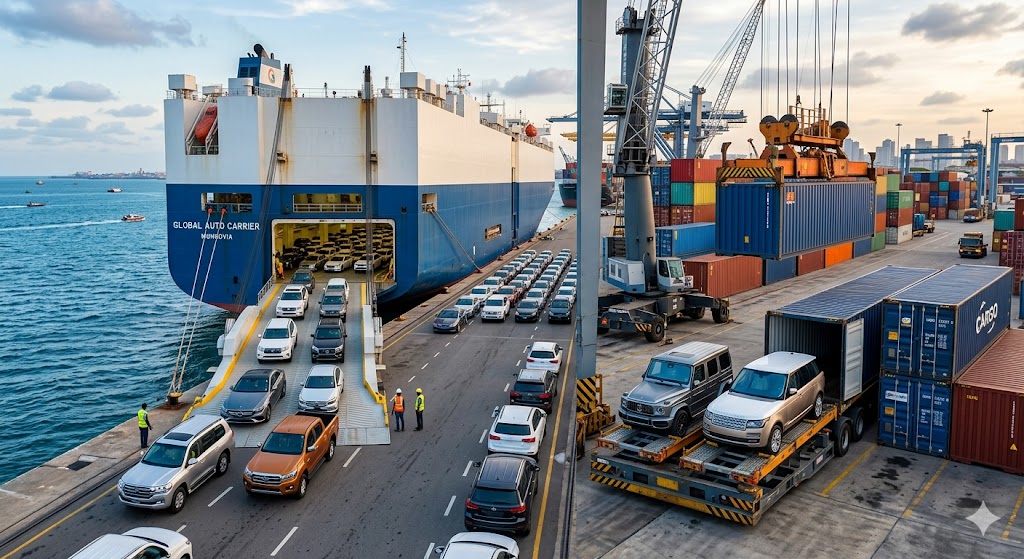
After payment is confirmed, you must arrange for your vehicle to be transported from the IAAI yard to a US port, and then shipped to Nigeria .
The Shipping Process Overview
- Vehicle pickup from IAAI yard – Arranged by your shipping company
- Inland trucking to US port – Typically Houston, Baltimore, or Savannah
- US Customs export clearance – Verifies title and export eligibility
- Ocean shipping to Nigeria – RoRo or container
- Arrival at Apapa or Tin Can Island Port – Lagos
Roll-on/Roll-off (RoRo) Shipping
RoRo is the most common and cost-effective method for shipping vehicles from IAAI to Nigeria .
Advantages:
- Lower cost than container shipping ($1,000–$1,800)
- Faster loading and discharge
- Suitable for standard sedans, SUVs, and trucks
- Widely used by Nigerian importers
Requirements:
- Vehicle must roll and steer (operational enough to be driven onto the ship)
- No personal items allowed inside the vehicle
- Not recommended for luxury or extremely high-value vehicles
Transit time: 4–6 weeks, depending on vessel schedules and transshipment .
Container Shipping
Container shipping places your vehicle inside a standard 20-foot or 40-foot container.
Advantages:
- Enhanced security and weather protection
- Ability to ship personal effects alongside the vehicle
- Suitable for luxury or high-value vehicles
Disadvantages:
- Higher cost than RoRo ($1,500–$2,500)
- Slightly longer processing time
Transit time: 5–8 weeks.
Port Selection
The most common US ports for IAAI vehicles destined for Nigeria are:
- Houston, Texas – Closest to major IAAI yards in Texas, shortest ocean distance to Nigeria
- Baltimore, Maryland – Serves East Coast vehicles
- Savannah, Georgia – Alternative East Coast port
Shipping Timeline from IAAI to Nigeria
| Stage | Typical Duration |
|---|---|
| Payment confirmation | 1–3 days |
| Vehicle pickup from IAAI yard | 1–5 days |
| Inland trucking to port | 3–10 days |
| Port processing and export clearance | 5–10 days |
| Ocean transit (RoRo) | 25–45 days |
| Total from payment to arrival | 40–70 days |
Documentation for IAAI Imports to Nigeria
Proper documentation is essential for both US export and Nigerian import. Missing or incorrect documents will cause delays and demurrage charges.
Documents Required from IAAI
- Certificate of Title – The most important document. Must be available before shipping.
- Commercial Invoice – IAAI will provide this after payment.
- Bill of Sale – Proof of transaction.
- Auction buyer sheet – Showing fees and charges.
Documents Required for Nigerian Import
- Bill of Lading – Provided by your shipping company after vessel departure
- Form M – Must be opened before vessel departure (critical)
- PAAR (Pre-Arrival Assessment Report) – Obtained after Form M
- Customs Form C250 – Obtained after duty payment in Nigeria
- Passport copy
- TIN (Tax Identification Number)
The Form M Requirement
Form M must be opened before your vessel departs the US port. This is non-negotiable. If your vehicle arrives without a valid Form M, you cannot commence clearance, and your vehicle will accrue demurrage charges daily .
Clearing Your IAAI Vehicle at Lagos Port
After your vehicle arrives at Apapa Port or Tin Can Island Port, it must clear Nigeria Customs Service processes.
Required Documents for Clearance
- Bill of Lading (original or telex release)
- Commercial invoice from IAAI
- Form M (opened before vessel departure)
- PAAR (Pre-Arrival Assessment Report)
- Certificate of Title
- Passport copy
- TIN
Working with a Licensed Clearing Agent
For all but the most experienced importers, using a licensed clearing agent is strongly recommended. Customs clearance involves multiple government agencies and proprietary digital systems that are difficult to navigate independently .
When selecting a clearing agent:
- Verify CRFFN registration
- Request a detailed, written quote separating government duties from service fees
- Ask for references from past clients
Demurrage Charges
If your vehicle remains at the port beyond the free storage period (typically 3–7 days after discharge), you will incur demurrage charges. Prompt documentation and agent engagement are essential to avoid these costs.
Telex Release vs Original Bill of Lading
Your shipping company will issue either:
- Telex release – Electronic release, faster, no risk of document loss
- Original Bill of Lading – Physical document, slower, must be couriered
Telex release is generally preferred for Nigerian imports as it eliminates document transit time .
Registering Your IAAI-Imported Vehicle
After customs clearance, your vehicle must be registered with the Federal Road Safety Corps (FRSC) or your state licensing authority before it can be legally driven.
The registration process includes:
- Vehicle inspection at a licensed VIS centre
- Obtaining Customs Form C250 (Proof of Ownership Certificate)
- Submitting documents to FRSC
- Receiving number plates and registration certificate
Refer to our detailed guide on how to register a tokunbo car in Nigeria for complete instructions.
Common Mistakes to Avoid When Buying from IAAI
Mistake 1: Bidding on Flood-Damaged Vehicles
Flood-damaged vehicles from hurricane states appear attractive due to low prices but often develop electrical problems that are expensive to repair in Nigeria.
Solution: Run a VIN history report before bidding. Check the sale date against hurricane seasons .
Mistake 2: Bidding on “Bill of Sale Only” or “Junk” Titles
These title types cannot be exported from the United States or legally registered in Nigeria.
Solution: Only bid on vehicles with Clean, Salvage, or Rebuilt titles that can be transferred.
Mistake 3: Failing to Open Form M Before Shipment
Form M must be opened before your vessel departs. Arrival without Form M means no clearance and accumulating demurrage charges.
Solution: Open Form M immediately after winning the bid and before the vessel sails.
Mistake 4: Underestimating Total Landed Cost
The winning bid is only one component. IAAI fees, trucking, shipping, and Nigerian duties often exceed the bid amount.
Solution: Calculate complete landed cost before bidding. Use the formula provided in this guide.
Mistake 5: Using Unverified Shipping or Clearing Agents
Unverified agents may delay your shipment, charge hidden fees, or disappear with your money.
Solution: Verify credentials, request references, obtain written agreements, and consider established companies like Autoriva.
How Autoriva Helps with IAAI Purchases and Import
Autoriva provides comprehensive services for Nigerians buying vehicles from IAAI and other US auctions.
Our Services
- Vehicle sourcing: We help identify suitable IAAI vehicles that match your budget and preferences
- Title verification: We confirm title availability and suitability before bidding
- Bidding representation: We bid on your behalf at IAAI and other auctions
- Payment coordination: We help you navigate domiciliary account payments to IAAI
- Form M and documentation: We prepare and submit all required documents before your vessel departs
- Shipping management: We coordinate inland transport, port processing, and ocean freight
- Tracking and updates: You receive regular status reports throughout the journey
- Customs clearance: Our licensed clearing agents manage Lagos port clearance
- Delivery and registration: We arrange transport to your location and assist with registration
Why Choose Autoriva
- Transparent pricing: Written quotes with no hidden fees
- Licensed partners: We work only with vetted, licensed agents and shippers
- End-to-end service: One partner for the entire process
- Proven track record: Hundreds of successful imports from IAAI to Nigeria
Frequently Asked Questions
Do I need a US dealer license to buy from IAAI?
No. IAAI allows international individuals to register as Public Buyers and bid on vehicles open to the public. However, some vehicles are restricted to licensed dealers only .
How much is IAAI membership fee?
$200 annually for both Public and Licensed Business accounts .
What is the penalty for not paying after winning a bid?
IAAI charges $1,000 or 15% of the sale price, whichever is greater .
What is the cheapest way to ship an IAAI vehicle to Nigeria?
RoRo shipping is the most cost-effective method for standard vehicles, typically costing $1,000–$1,800 .
How long does IAAI shipping take?
Ocean transit typically takes 4–6 weeks. Complete timeline from auction win to Nigerian delivery is 90–120 days.
Can I ship a non-running vehicle from IAAI?
RoRo shipping requires vehicles to roll and steer. Non-running vehicles may require container shipping or forklift loading, which incurs additional fees .
Does Autoriva have an official partnership with IAAI?
Autoriva is not an official IAAI partner, but we have extensive experience bidding on and importing vehicles from IAAI. We maintain relationships with licensed brokers and shipping companies that facilitate IAAI purchases for Nigerian clients.
Conclusion
Buying cars from IAAI and importing them to Nigeria offers significant potential savings over local purchase—but only when executed correctly. Success requires understanding IAAI’s registration and bidding systems, identifying suitable vehicles, calculating complete landed costs, making timely payments from a domiciliary account, coordinating RoRo or container shipping, and managing Nigerian customs clearance.
The potential rewards are substantial: savings of ₦5 million to ₦10 million or more compared to local dealership prices. However, the risks of errors—bidding on flood-damaged vehicles, failing to open Form M, engaging unverified agents—can transform potential savings into significant losses.
For importers who prefer to delegate the complexity to experienced professionals, Autoriva provides end-to-end services from IAAI bidding to Nigerian delivery.
Ready to buy from IAAI and ship to Nigeria with confidence? Contact Autoriva today for a consultation. We will help you identify the right vehicle, calculate total landed cost, manage the bidding and payment process, and handle shipping and clearance from the US to your doorstep in Nigeria.