You have won the auction. You have paid the invoice. The vehicle has been delivered to the port in Houston, Baltimore, or Charleston. The shipping line has confirmed that your car is booked on the next vessel to Apapa Port, Lagos.
Now begins the most anxious period of the entire import process: the wait.
For the next four to eight weeks, your vehicle will be at sea. During this time, you will naturally want to know where your car is, when it will arrive, and whether there are any delays. The good news is that modern shipping technology makes real-time tracking possible. The less obvious news is that tracking a vehicle shipment is not as simple as clicking a single link. You need to understand the different shipping methods, the tracking systems used by various carriers, and the specific reference numbers that unlock location information.
This guide provides a comprehensive, step-by-step overview of how to track your car shipment from the United States to Nigeria. You will learn the difference between container tracking and RoRo tracking, how to use shipping line portals, what information you need to obtain from your freight forwarder, and how to interpret the various status messages you will encounter.
By the conclusion of this guide, you will be equipped to monitor your vehicle’s journey across the Atlantic with confidence, knowing exactly what each tracking update means and when to expect arrival at Apapa Port.
Understanding the Two Primary Shipping Methods for Vehicles
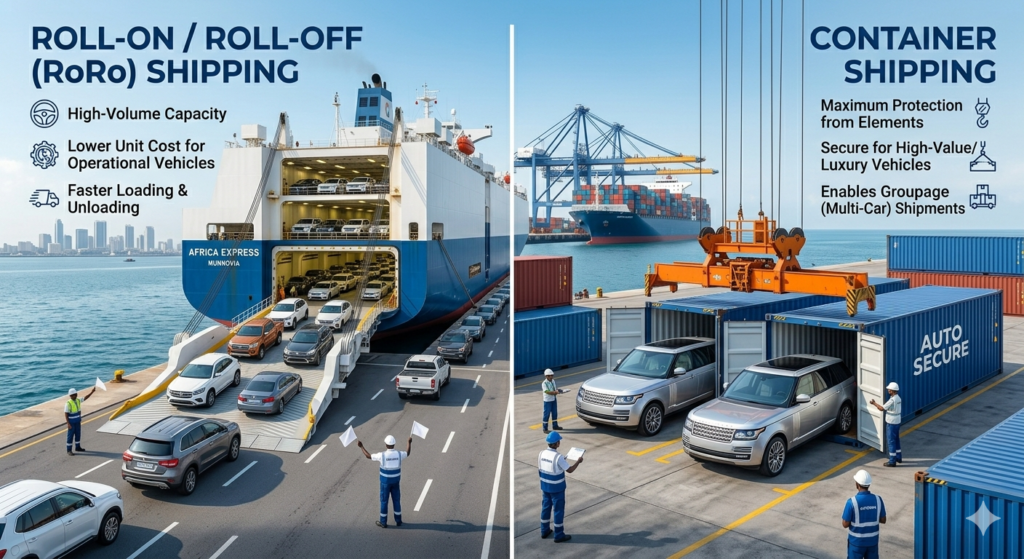
Before discussing tracking procedures, it is essential to understand the two primary methods by which vehicles are shipped from the United States to Nigeria. The tracking process differs significantly between these methods.
Roll-on/Roll-off (RoRo) Shipping
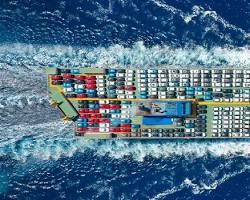
RoRo is the most common and cost-effective method for shipping privately owned vehicles from the USA to Nigeria. In this method, your vehicle is driven onto the vessel at the origin port and driven off at the destination port.
How RoRo tracking works: Your vehicle is assigned a unique Booking Reference Number and Bill of Lading Number. These numbers are linked to the vessel name and voyage number. Tracking involves monitoring the vessel’s position and confirming that your vehicle is on board.
Advantages for tracking: RoRo shipments are typically easier to track because the vessel schedules are published and multiple online platforms aggregate RoRo vessel positions.
Common RoRo carriers to Nigeria: Grimaldi Lines, Höegh Autoliners, Wallenius Wilhelmsen, and ARC (American Roll-on Roll-off Carrier).
Container Shipping
In this method, your vehicle is loaded into a standard 20-foot or 40-foot shipping container, which is then loaded onto a container vessel. This method is more expensive than RoRo but offers additional protection for the vehicle and allows you to ship personal effects alongside the car.
How container tracking works: Your container is assigned a unique Container Number (e.g., MSCU1234567). This number is linked to the Bill of Lading Number and the vessel details. Tracking involves monitoring the container’s location through the shipping line’s container tracking system.
Advantages for tracking: Container tracking is highly granular. You can see exactly when the container is loaded, when it arrives at transshipment ports, and when it is discharged at Apapa.
Common container carriers to Nigeria: Maersk, MSC (Mediterranean Shipping Company), CMA CGM, ONE (Ocean Network Express), and COSCO.
Critical Reference Numbers You Will Need for Tracking
Before you can track anything, you must obtain the correct reference numbers from your freight forwarder or shipping agent. Without these numbers, tracking is impossible.
Bill of Lading Number (B/L Number)
The Bill of Lading is the most important shipping document. It serves as:
- A contract of carriage between you and the shipping line
- A receipt confirming that the shipping line has received your vehicle
- A document of title (in its original form)
The Bill of Lading number is typically an alphanumeric code, often 10 to 15 characters long. For container shipments, this number is sometimes called the House Bill of Lading (HBL) if issued by a freight forwarder, or the Master Bill of Lading (MBL) if issued directly by the shipping line.
Where to find it: Your freight forwarder or Autoriva will provide a copy of the Bill of Lading. The number is prominently displayed at the top of the document.
Container Number (for container shipments only)
If your vehicle is shipped in a container, you will receive a unique container number. This is a four-letter prefix followed by seven digits (e.g., MAEU9876543). The prefix identifies the shipping line that owns the container.
Where to find it: The container number appears on the Bill of Lading and on shipping instructions from your freight forwarder.
Booking Reference Number (for RoRo shipments)
RoRo carriers often use a booking reference number in addition to the Bill of Lading. This number is generated when the shipping line confirms your vehicle’s space on the vessel.
Where to find it: Your booking confirmation email or document from your freight forwarder.
Vessel Name and Voyage Number
Every vessel sailing from the US to Nigeria has a name (e.g., “MSC Vigour” or “Grande Angola”) and a voyage number (e.g., “voyage 245W” or “sailing 03/25”). These identifiers allow you to track the vessel itself, independent of your specific vehicle.
Where to find it: The Bill of Lading or booking confirmation will list the vessel name and voyage number.
Step-by-Step Tracking for RoRo Shipments
RoRo tracking involves monitoring both your specific booking and the vessel carrying your vehicle. Follow these steps.
Step 1: Obtain Your RoRo Booking Confirmation
Immediately after your vehicle is booked on a RoRo vessel, your freight forwarder should provide a booking confirmation. This document contains:
- Your name as the shipper or consignee
- The vehicle details (make, model, VIN or chassis number)
- The vessel name and voyage number
- The estimated time of departure (ETD) from the US port
- The estimated time of arrival (ETA) at Apapa Port
- Your booking reference number
Retain this document. You will refer to it throughout the tracking process.
Step 2: Access the Shipping Line’s Tracking Portal
Most major RoRo carriers provide online tracking portals. Navigate to the carrier’s website and look for a “Track Cargo” or “Customer Portal” section.
| Carrier | Tracking Portal URL |
|---|---|
| Grimaldi Lines | grimaldi.napoli.it/tracking |
| Höegh Autoliners | hoeghautoliners.com/track |
| Wallenius Wilhelmsen | wwtracking.com |
| ARC (American Roll-on Roll-off Carrier) | arcshipping.com/track-cargo |
Step 3: Enter Your Tracking Reference
On the tracking portal, you will typically be asked to enter either:
- Your Bill of Lading number, or
- Your booking reference number, or
- Your VIN (chassis number)
Enter the information exactly as it appears on your documentation. Tracking systems are case-sensitive and character-sensitive.
Step 4: Interpret the Tracking Status
The tracking portal will display one or more of the following statuses.
| Status | Meaning |
|---|---|
| Booking Confirmed | Space on the vessel has been reserved for your vehicle |
| Received at Terminal | Your vehicle has been delivered to the port and accepted by the shipping line |
| Loaded on Vessel | Your vehicle has been driven onto the ship |
| Vessel Departed | The vessel has left the US port |
| In Transit / At Sea | The vessel is en route to Nigeria |
| Transshipment | The vessel has stopped at an intermediate port (e.g., Dakar, Tanger Med) |
| Vessel Arrived | The vessel has reached Apapa Port |
| Discharged | Your vehicle has been driven off the vessel |
Step 5: Track the Vessel’s Position Using Marine Traffic Websites
For a more visual and real-time tracking experience, you can track the vessel itself using marine traffic websites. These platforms show the current position, speed, heading, and estimated arrival time of commercial vessels worldwide.
Recommended marine traffic platforms:
- MarineTraffic.com (free tier with basic features)
- VesselFinder.com (free tier available)
- FleetMon.com
How to use these platforms:
- Obtain the vessel name from your Bill of Lading (e.g., “Grande Angola”)
- Enter the vessel name into the search bar on MarineTraffic.com
- The platform will display the vessel’s current position on a map
- Click on the vessel for details including speed, destination, and ETA
Limitations of free platforms: Free tiers often show vessel positions with some delay (up to several hours) and may not display detailed route history. Paid subscriptions offer real-time tracking and more data points.
Step-by-Step Tracking for Container Shipments
Container tracking offers more granular detail than RoRo tracking. Follow these steps.
Step 1: Obtain Your Container Number and Bill of Lading
Your freight forwarder will provide a House Bill of Lading (HBL) and a Container Number. For container shipments, you may also receive a Master Bill of Lading (MBL) issued by the main shipping line.
Key numbers to collect:
- Container number (e.g., MSCU1234567)
- House Bill of Lading number
- Master Bill of Lading number
- Vessel name and voyage number
Step 2: Access the Shipping Line’s Container Tracking Portal
Every major container shipping line provides a container tracking tool on its website.
| Carrier | Tracking Portal URL |
|---|---|
| Maersk | maersk.com/tracking |
| MSC | msc.com/track-cargo |
| CMA CGM | cma-cgm.com/tracking |
| ONE (Ocean Network Express) | one-line.com/track |
| COSCO | lines.coscoshipping.com/track |
Step 3: Enter Your Container Number
On the tracking portal, enter your container number exactly as it appears. The system will return a detailed event history showing every stage of the container’s journey.
Step 4: Interpret Container Tracking Events
Container tracking provides a chronological list of events. Understanding these events helps you know exactly where your vehicle is.
| Event Code | Meaning |
|---|---|
| Gate In / Received at Terminal | The container has been delivered to the origin port terminal |
| Loaded on Vessel | The container has been loaded onto the vessel |
| Vessel Departed | The vessel has left the origin port |
| Arrived at Transshipment Hub | The vessel has reached an intermediate port (e.g., Algeciras, Tanger Med, Dakar) |
| Loaded on Second Vessel (if transshipment) | The container has been moved from the first vessel to a second vessel |
| Vessel Arrived at Destination Port | The vessel has arrived at Apapa Port |
| Discharged from Vessel | The container has been unloaded from the vessel |
| Customs Hold / Hold for Examination | The container has been flagged for inspection (requires action) |
| Available for Pickup | The container is ready for collection or clearance |

Step 5: Understand Transshipment Routes
Most container shipments from the USA to Nigeria do not sail directly. They transship through intermediate ports. Common transshipment hubs for Nigeria-bound cargo include:
- Algeciras, Spain
- Tanger Med, Morocco
- Dakar, Senegal
- Cotonou, Benin (less common)
- Colon, Panama (for vessels transiting the Panama Canal)
When your container arrives at a transshipment hub, it will be unloaded from the first vessel and stored temporarily before being loaded onto a second vessel for the final leg to Lagos. This process can take several days. Do not be alarmed if tracking shows no movement for three to seven days during transshipment. This is normal.
Using Freight Forwarder Tracking Portals
Many freight forwarders that specialise in vehicle shipping from the USA to Nigeria provide their own client-facing tracking portals. These portals aggregate data from multiple shipping lines and present it in a simplified format.
Advantages of freight forwarder portals:
- Single login to track all your shipments (if you are a repeat importer)
- Simplified status language (less technical than carrier portals)
- Proactive email or SMS notifications
Limitations:
- Updates may lag behind the shipping line’s own portal by several hours or days
- Not all freight forwarders offer this service
If you are importing through Autoriva, we provide regular tracking updates as part of our service. You do not need to navigate multiple carrier portals unless you wish to do so for additional detail.
Understanding Shipping Timelines from the US to Nigeria
Tracking is most meaningful when you have realistic expectations of how long each stage should take. Below is a typical timeline for a vehicle shipped from the US Gulf Coast (Houston) to Apapa Port, Lagos.
| Stage | Typical Duration |
|---|---|
| Vehicle delivery to port | 1–3 days after auction payment |
| Port processing and export documentation | 3–7 days |
| Vessel waiting time (port congestion) | 3–14 days (varies significantly) |
| Ocean transit (direct vessel, no transshipment) | 25–35 days |
| Ocean transit (with transshipment via Europe) | 35–50 days |
| Discharge and terminal processing at Apapa | 3–10 days |
| Customs clearance (separate from shipping) | 7–21 days |
Important note: The tracking process ends when your vehicle is discharged from the vessel and made available at the port. Customs clearance and port delivery are separate processes managed by your clearing agent. Tracking will not tell you when your vehicle has been cleared by Customs.
Common Tracking Issues and How to Resolve Them
Even under normal circumstances, tracking systems are not perfect. Below are common issues importers encounter and practical solutions.
Issue 1: Tracking Portal Shows “No Records Found”
You enter your Bill of Lading number or container number, and the portal returns a message that no records exist.
Possible causes:
- The shipping line has not yet updated its system (especially common within 48 hours of booking)
- You are using the wrong portal (e.g., using Maersk tracking for an MSC shipment)
- You have entered the number incorrectly (check for transposed digits)
Resolution: Wait 24 to 48 hours and try again. Confirm with your freight forwarder that the vessel has actually departed. If the problem persists, request a screenshot from your freight forwarder of their internal tracking view.
Issue 2: Tracking Shows No Updates for Two Weeks
Your vessel departed three weeks ago, but tracking shows no updates after the departure event.
Possible causes:
- The vessel is in transit across the Atlantic (no intermediate ports mean no new events)
- The vessel has encountered delays (weather, mechanical issues, port congestion)
- The tracking portal is not updating automatically
Resolution: Track the vessel directly using MarineTraffic.com. If the vessel’s position shows it is still moving toward Nigeria, there is likely no problem. If the vessel appears stationary for more than five days, contact your freight forwarder.
Issue 3: Vessel Has Arrived, but Your Container Is Not Discharged
Tracking shows the vessel has arrived at Apapa, but your container or RoRo vehicle remains in “Discharge Pending” status for several days.
Possible causes:
- Port congestion (Apapa is frequently congested)
- The vessel is waiting at anchorage outside the port (common)
- Operational prioritisation (the terminal may unload other cargo first)
Resolution: This is often normal, though frustrating. Apapa Port congestion is a well-documented challenge. If your vehicle remains undischarged for more than 10 days after vessel arrival, escalate to your freight forwarder for investigation.
Issue 4: Tracking Shows “Customs Hold”
For container shipments, tracking may display a “Customs Hold” or “Hold for Examination” event.
Meaning: Nigeria Customs Service has flagged the container for inspection before release. This does not necessarily indicate a problem. Random inspections occur regularly.
Resolution: Notify your clearing agent immediately. They will coordinate with Customs to schedule the inspection. Autoriva’s clearing team manages this process on behalf of clients.
Issue 5: Different Tracking Portals Show Conflicting Information
Your freight forwarder’s portal shows one estimated arrival date, while the shipping line’s portal shows another. MarineTraffic shows a third date.
Resolution: The shipping line’s own portal is the most authoritative source for events and dates. Freight forwarder portals may cache data and update less frequently. MarineTraffic estimates are based on vessel speed and position and do not account for port delays. Rely on the shipping line portal as your primary source.
Proactive Tracking: What You Should Do at Each Stage
Rather than checking tracking portals obsessively, adopt a systematic approach. Here is a timeline of when to check and what to look for.
Within 7 Days of Booking
Action: Obtain your Bill of Lading number, container number (if applicable), vessel name, and voyage number from your freight forwarder.
What to confirm: That the vehicle details on the Bill of Lading match your auction invoice. The VIN or chassis number must be identical.
On the Estimated Departure Date
Action: Check the shipping line’s tracking portal.
What to look for: Status should be “Loaded on Vessel” or “Vessel Departed.” If the status remains “Received at Terminal” after the departure date, your vehicle may have missed the vessel and will sail on the next available voyage.
Every 7 to 10 Days During Transit
Action: Check the shipping line portal once per week. Track the vessel on MarineTraffic if you want visual confirmation.
What to look for: No news is generally good news. If the vessel is moving toward Nigeria, your vehicle is moving with it.
One Week Before Estimated Arrival
Action: Check the shipping line portal daily.
What to look for: The status should change to “Vessel Arrived” or “Discharged” within a few days of the ETA. Prepare your clearing agent for the arrival.
After Arrival at Apapa
Action: Tracking is no longer the primary tool. Your clearing agent will take over.
What to do: Provide your clearing agent with the original Bill of Lading or telex release. The agent will coordinate discharge, customs clearance, and port delivery.
The Role of Your Freight Forwarder in Tracking
While online tracking portals give you visibility, your freight forwarder has access to more detailed information and can resolve issues that you cannot.
What your freight forwarder can do that you cannot:
- Access internal shipping line systems that show more granular event data
- Communicate directly with the shipping line’s local agent in Nigeria
- Expedite document corrections if there are discrepancies
- Arrange for telex release if the original Bill of Lading is delayed
If you are working with Autoriva, we manage the freight forwarder relationship on your behalf. You receive regular tracking updates without needing to navigate multiple carrier portals yourself.
Documentation Required for Delivery After Tracking Shows Arrival
Tracking shows that your vessel has arrived and your vehicle has been discharged. Your work is not yet complete. The following documents are required to take possession of your vehicle from the port.
- Original Bill of Lading (or telex release confirmation)
- Commercial invoice from the auction house or seller
- Packing list (for container shipments)
- Form M (opened before shipment)
- PAAR (obtained from Customs)
- Customs Duty Payment Receipt (after duty assessment)
Your clearing agent will use these documents to process customs clearance. Tracking does not replace any of these requirements.
How Autoriva Simplifies Shipment Tracking
Autoriva provides end-to-end vehicle import services that include shipment coordination and tracking as standard features.
Our tracking support includes:
- Booking confirmation: We provide you with the Bill of Lading number, container number (if applicable), vessel name, and voyage number as soon as they are available.
- Regular updates: We monitor the shipment and provide status updates at key milestones (vessel departure, transshipment, arrival, discharge).
- Issue escalation: If tracking shows a delay or exception, we communicate directly with the shipping line or freight forwarder to understand the cause and expected resolution.
- Document preparation: We ensure that all documentation required for customs clearance is ready before the vessel arrives, preventing delays at the port.
- Clearing coordination: Once the vehicle is discharged, our clearing team takes over to handle customs clearance and port delivery.
You are welcome to track your shipment independently using the methods described in this guide. However, if you prefer a hands-off experience, Autoriva manages the entire process on your behalf.
Frequently Asked Questions
How long does it take for a car to ship from the USA to Nigeria?
Ocean transit typically takes 25 to 50 days depending on whether the vessel sails directly or transships through a hub like Algeciras or Dakar. Total time from port delivery to arrival at Apapa is typically 35 to 60 days when including port waiting times.
Can I track my car in real time?
Real-time tracking is not available for the vehicle itself unless you install a GPS tracker inside the car (which is generally not permitted on commercial vessels). However, you can track the vessel or container in near real-time using carrier portals and marine traffic websites.
What is the difference between a Bill of Lading number and a container number?
The Bill of Lading number identifies the entire shipment contract. The container number identifies the specific container holding your vehicle. For RoRo shipments, there is no container number; the Bill of Lading number is the primary reference.
Why does my tracking show the vessel going to Europe instead of directly to Nigeria?
Many container vessels from the US Gulf Coast sail first to European hubs (Algeciras, Tanger Med, Rotterdam) before continuing to West Africa. This is normal and does not indicate an error. Your vehicle is simply transshipping through Europe.
What should I do if my tracking has not updated for three weeks?
First, track the vessel name on MarineTraffic.com to confirm the vessel is still moving. If the vessel is at sea, no new tracking events will appear until it reaches the next port. If the vessel appears stationary for more than seven days, contact your freight forwarder.
Can Autoriva help me track my shipment if I arranged the shipping myself?
Yes. Autoriva can assist with tracking and customs clearance even if you handled the auction and shipping independently. Contact us with your Bill of Lading and other documents for a consultation.
Conclusion
Tracking your car shipment from the United States to Nigeria requires understanding the difference between RoRo and container shipping, obtaining the correct reference numbers (Bill of Lading, container number, vessel name), and using the appropriate carrier tracking portals or marine traffic websites.
The process is straightforward once you have the necessary information. However, tracking systems are not always perfectly updated, and delays at ports—particularly Apapa—are common. Patience and realistic expectations are valuable companions during the waiting period.
For importers who prefer to focus on their daily responsibilities while experts manage the logistics, Autoriva provides comprehensive tracking and coordination services. From the moment your vehicle is booked on a vessel to the day it is cleared from Apapa Port, we monitor every stage and keep you informed.
Ready to import your vehicle with professional tracking and coordination? Contact Autoriva today to discuss your car importation needs. We handle the logistics so you can focus on enjoying your vehicle when it arrives.