A question that surfaces frequently among cost-conscious Nigerian car importers is deceptively simple: Can I clear my vehicle myself without paying a clearing agent?
On the surface, the logic appears sound. Clearing agents charge fees ranging from ₦200,000 to ₦500,000 or more per vehicle. If you could eliminate that expense by handling the process yourself, you would increase your savings significantly.
The reality, however, is more complex.
While it is technically possible to clear a vehicle without a licensed clearing agent, the practical obstacles are substantial. The Nigeria Customs Service operates digital systems that are accessible primarily through licensed agents. Physical access to port terminals is restricted. And the bureaucratic complexity of the process—involving multiple agencies, proprietary software, and ever-changing regulations—makes independent clearance exceptionally challenging for first-time importers.
This guide provides a comprehensive, realistic assessment of importing a car to Nigeria without a clearing agent. You will learn what the law permits, the step-by-step process if you choose to proceed independently, the hidden costs and risks, and—most importantly—whether the potential savings justify the additional effort and exposure.
By the conclusion of this guide, you will have the information necessary to make an informed decision about whether to engage a clearing agent or attempt the process yourself.
The Short Answer: Can You Legally Clear Your Own Vehicle?
Yes, it is legal for an individual to clear their own vehicle through Nigeria Customs Service, provided you have all the required documentation and can complete the necessary procedures .
However, the law and practical reality diverge significantly.
The Nigeria Customs Service does not prohibit individuals from acting as their own clearing agents. There is no statutory requirement that only licensed companies can clear vehicles. In principle, any importer can present their documentation, pay duties, and obtain release of their vehicle.
The challenge lies in the operational requirements.
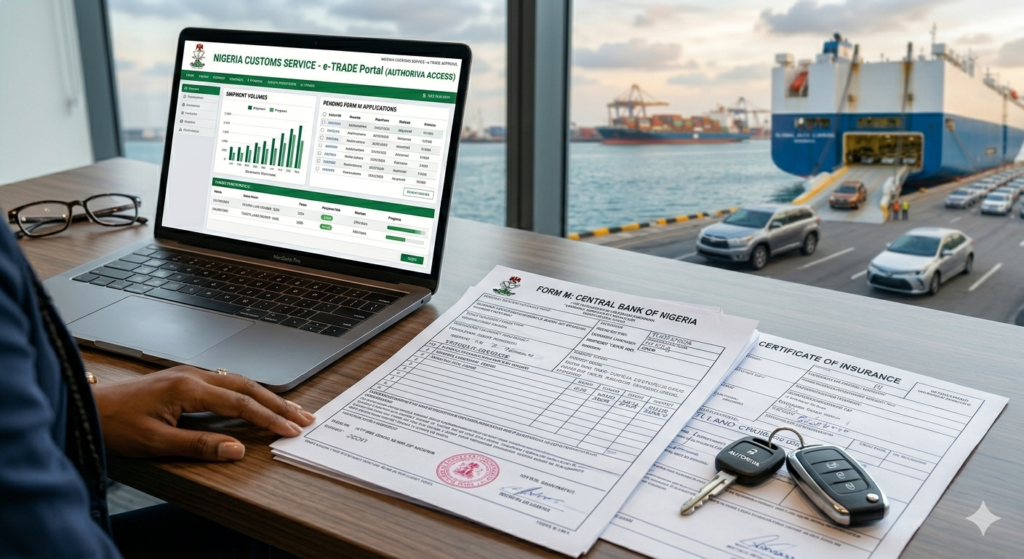
Customs clearance in Nigeria is conducted through the Nigeria Integrated Customs Information System (NICIS II) , a digital platform that requires user accounts and access credentials . These credentials are typically issued only to registered clearing agents and licensed freight forwarders. While an individual can theoretically obtain access, the process is cumbersome and rarely pursued.
Furthermore, physical access to port terminals—where vehicles are discharged and examinations occur—is restricted. Terminal operators require identification cards and gate passes that are typically held by licensed agents.
The consensus among experienced importers is clear: while independent clearance is legally permissible, it is practically inadvisable for all but the most experienced and well-connected individuals .
The Legal Framework for Vehicle Import Clearance
Before examining the DIY process, it is essential to understand the legal and regulatory framework governing vehicle clearance in Nigeria.
Primary Governing Authorities
| Authority | Role in Vehicle Clearance |
|---|---|
| Nigeria Customs Service (NCS) | Duty assessment, payment collection, physical examination, release |
| Nigerian Ports Authority (NPA) | Port management, vessel berthing, terminal operations |
| Terminal Operators | Cargo discharge, storage, gate exit |
| NAQS (Agric Quarantine) | Inspection of certain vehicle types |
| CRFFN | Licensing and regulation of clearing agents |
Required Documents for Any Clearance (Agent or No Agent)
Regardless of whether you use an agent, the following documents are mandatory :
- Bill of Lading (original or telex release) – Proof of shipment and ownership
- Commercial Invoice – From the auction house or seller
- Form M – Mandatory import declaration opened before vessel departure
- PAAR (Pre-Arrival Assessment Report) – Issued by Customs after Form M processing
- Packing List – For container shipments
- Certificate of Origin – Where the vehicle was manufactured
- Insurance Certificate – Marine insurance covering ocean transit
- Tax Identification Number (TIN) – For duty payment
- Valid Identification – International passport or national ID
The Form M Requirement
Form M is non-negotiable. It must be opened before your vessel departs the port of origin . Without a valid Form M linked to your shipment, customs clearance cannot commence.
Form M is processed through an authorised Nigerian bank. You do not need a clearing agent to open Form M—your bank can assist. However, the bank will require your import documents, including the proforma invoice from the seller.
Critical warning: If your vehicle arrives at Apapa Port without a valid Form M, you will be unable to clear it. Your vehicle will accrue demurrage charges (₦30,000 to ₦100,000 per day) while you scramble to open Form M retroactively—a process that is neither guaranteed nor straightforward.
Step-by-Step Process to Clear Your Vehicle Without an Agent
If you are determined to attempt independent clearance, the following steps outline the process. Be aware that this guide reflects the general procedure; specific requirements may vary by port, terminal, and vehicle type.
Step 1: Obtain and Verify Your Documentation
Before your vessel arrives, ensure all documents are complete and consistent.
Action items:
- Obtain the original Bill of Lading from your freight forwarder (or arrange for telex release)
- Verify that the chassis number, vehicle model, year, and your name are identical across all documents
- Confirm that Form M has been opened and approved by your bank
- Ensure your TIN is active and accessible
Why this matters: Document discrepancies are the single most common cause of clearance delays. A single incorrect digit in the chassis number can halt the process for weeks .
Step 2: Register with the Nigeria Customs Service Digital Platform
The Nigeria Customs Service operates NICIS II, the digital platform through which all import declarations and duty assessments are processed .
For independent importers: You will need to register for access to this platform. This requires:
- Completing registration forms at the Customs Command handling your port (Apapa, Tin Can, or PTML)
- Providing your TIN and identification documents
- Potentially attending training or orientation sessions
Practical reality: Most independent importers find this registration process bureaucratic and time-consuming. Many ultimately engage an agent specifically to access the digital system rather than navigating it alone.
Step 3: Obtain PAAR (Pre-Arrival Assessment Report)
PAAR is issued by Customs after reviewing your Form M and supporting documents. It contains the duty assessment for your vehicle.
Without an agent: You must submit your documents directly to the Customs Valuation Unit at the port command. This requires:
- Physical submission of Form M, Bill of Lading, and commercial invoice
- Waiting for the valuation officer to assess your vehicle
- Receiving the PAAR document
Timeline: With an agent, PAAR processing typically takes 1–3 days. Without an agent, first-time importers may wait 5–10 days due to unfamiliarity with the process and lack of established relationships.
Step 4: Calculate and Pay Import Duties
Once you have the PAAR, you must pay the assessed duties. Import duty on used vehicles is generally 35% of the CIF value (Cost, Insurance, Freight), with an additional 35% levy on certain vehicle categories—bringing the total to 70% .
Payment process without an agent:
- Take the PAAR to an authorised bank (designated by Customs)
- Pay the duty amount from your naira account
- Obtain the Customs Duty Payment Receipt
- Ensure the receipt is registered in the Customs system
Hidden complication: Some banks are unfamiliar with processing duty payments for individuals without agent backing. You may encounter resistance or delays. Persistence and clear documentation are essential.
Step 5: Terminal Access and Vehicle Location
Before physical examination can occur, you must locate your vehicle within the port terminal.
Challenge: Terminal operators restrict access to licensed clearing agents. As an individual, you may be denied entry to the terminal floor .
Potential workaround:
- Request written permission from the terminal operator (difficult to obtain)
- Engage a licensed agent on a limited basis only for terminal access (effectively hiring an agent for this specific task)
- Use the shipping line’s tracking system to confirm discharge status without physical access
Realistic assessment: Most independent importers find they cannot access the terminal without some form of agent assistance at this stage.
Step 6: Physical Examination by Customs
Customs officers must physically inspect your vehicle to verify that the chassis number, engine number, and specifications match the documentation .
Without an agent:
- You must be present at the examination (or arrange representation)
- You must coordinate with Customs officers to schedule the examination
- You must ensure the vehicle is accessible (moved from the discharge area to the examination bay)
Practical obstacles:
- Examination scheduling is typically managed through licensed agents
- Customs officers may prioritise examinations for agents they know
- You may wait significantly longer for examination than agent-represented importers
Step 7: Payment of Terminal and Shipping Charges
After Customs releases the vehicle, you must pay terminal handling charges and shipping line fees.
Without an agent:
- Visit the shipping line’s local office with your Bill of Lading
- Request assessment of terminal charges
- Pay fees via bank transfer or cash (depending on the shipping line)
- Obtain a gate pass from the terminal operator
Terminal charges typically include:
- Terminal handling fee (₦50,000 – ₦150,000)
- Shipping line release fee ($50 – $150 equivalent)
- Gate pass fee (₦10,000 – ₦25,000)
Step 8: Final Exit from Port
With all fees paid and documents stamped, you can drive your vehicle out of the port.
Final steps:
- Present the gate pass, customs release, and shipping line release at the exit gate
- Pay any final “gate charges” (some terminals levy small fees at exit)
- Drive the vehicle out—ensuring it is roadworthy (battery, tyres, fluids)
Warning: Driving a vehicle out of Apapa Port without proper documentation—or while port roads are congested—can be hazardous. Ensure you have temporary movement papers if registration is not yet complete.
Why Licensed Clearing Agents Are Used by Almost Everyone
Given that independent clearance is technically legal, why do virtually all importers—including experienced dealers—use licensed agents?
Reason 1: Digital System Access
The NICIS II platform, through which PAAR is obtained and duty payments are processed, is designed for commercial users. Individual importers face significant hurdles in obtaining login credentials and understanding the interface .
Licensed agents maintain active accounts, undergo regular training, and process hundreds of declarations monthly. They navigate the system efficiently.
Reason 2: Established Relationships
Customs officers, terminal operators, and shipping line representatives work with licensed agents daily. These relationships facilitate smoother examinations, faster document processing, and quicker resolution of discrepancies .
An independent importer is unknown to these officials. There is no relationship to leverage when problems arise.
Reason 3: Knowledge of Current Procedures
Customs procedures change. Documentation requirements shift. Fee structures are updated. Licensed agents receive circulars and attend stakeholder meetings. Independent importers must discover changes through trial and error—often at the cost of delays.
Reason 4: Physical Access to Terminals
As noted earlier, terminal operators restrict access to licensed agents . Individuals may be denied entry entirely or subjected to significant delays and additional fees.
Reason 5: Risk Mitigation
Clearing agents carry professional indemnity insurance. If an agent makes an error in documentation or payment, the importer may have recourse.
An independent importer who makes an error bears the full cost—whether through demurrage charges, penalties, or vehicle seizure.
Hidden Costs of DIY Clearance That First-Time Importers Miss
Even if you avoid paying a clearing agent’s service fee, other costs may emerge.
Demurrage Charges
Demurrage is the fee charged when cargo remains at the port beyond the free period (typically 3–7 days after discharge). Rates range from ₦30,000 to ₦100,000 per day .
An experienced agent clears a vehicle in 7–14 days on average. A first-time independent importer might take 20–30 days—or longer. The additional demurrage charges can easily exceed the agent’s fee.
Transport and Logistics Costs
Without agent relationships, you may pay higher rates for:
- Local transport within the port
- Trucking from Apapa to your location
- Temporary storage if delays occur
Multiple Trip Costs
Independent clearance requires multiple visits to:
- Customs offices (valuation, PAAR)
- Banks (duty payment)
- Terminal operator (handling charges)
- Shipping line (release)
- Exit gate
Each visit incurs transport costs, and potentially missed work hours.
Opportunity Cost of Time
The most significant hidden cost is your time. An experienced agent handles clearance while you focus on your business or profession. DIY clearance may require full days—sometimes weeks—spent at the port.
The New Customs Digital Verification System (CVMS)
In October 2025, the Nigeria Customs Service launched the Customs Verification Management System (CVMS) , a digital platform designed to enhance transparency in vehicle verification .
What CVMS Does
- Allows importers to verify vehicle clearance status online
- Creates a centralised database of properly cleared vehicles
- Reduces opportunities for document forgery
- Costs ₦15,000 per verification
How CVMS Affects Independent Clearance
CVMS is a positive development for transparency. However, it does not replace the need for a clearing agent. It is a verification tool—not a clearance platform.
Independent importers can use CVMS to confirm that their vehicle has been properly cleared and to verify documents before purchasing from third parties. But CVMS does not simplify the PAAR, duty payment, or examination processes.
A Hybrid Approach: Limited Engagement of an Agent
For importers who want to reduce agent fees without going fully independent, a hybrid approach may be viable.
The “Documentation Only” Service
Some licensed agents offer limited services:
- Form M processing only: The agent opens Form M and obtains PAAR. You handle the rest.
- Examination only: You handle documentation and duty payment; the agent coordinates physical examination.
- Terminal access only: You handle customs; the agent provides the access credentials and gate pass.
How to Negotiate Limited Services
When contacting a clearing agent, specify:
- “I want to handle duty payment myself. I only need assistance with PAAR processing and terminal access.”
- “What is your fee for Form M and PAAR only, excluding physical examination and delivery?”
Agents may agree to reduced fees for reduced scope of work.
Cost Comparison
| Service Model | Typical Cost |
|---|---|
| Full-service clearing agent (end-to-end) | ₦300,000 – ₦500,000 |
| Limited service (documentation + terminal access) | ₦100,000 – ₦200,000 |
| Fully independent DIY | ₦0 (agent fee) – but higher risk and time cost |
When DIY Clearance Might Make Sense
Despite the challenges, there are scenarios where independent clearance could be considered.
You Are a Repeat Importer
If you import vehicles regularly (10+ per year), the time invested in learning the process and building relationships pays off. Some large-scale dealers maintain in-house clearance capabilities.
You Have Existing Port Relationships
If you have a relative, friend, or business partner who works at the port or at a terminal, you may have access that other individuals lack.
You Are Importing a Low-Value Vehicle
If the vehicle’s value is low (e.g., ₦5 million landed cost), paying ₦300,000 for an agent represents a significant percentage of the total. The relative cost may justify the DIY effort.
You Have Extensive Free Time
If your time has low opportunity cost and you are willing to spend weeks navigating bureaucracy, DIY clearance may be an option.
Common Questions About DIY Car Clearance
Can I clear my car without a CRFFN license?
Yes. You do not need a CRFFN license to clear your own vehicle for personal use. CRFFN licenses are required for individuals or companies offering clearing services to others. However, as noted above, access to digital systems and terminals remains challenging without agent credentials .
How much can I save by not using an agent?
Agent fees typically range from ₦200,000 to ₦500,000 per vehicle. In principle, this is your potential saving. However, if DIY clearance results in demurrage charges of ₦300,000 or more, your “saving” disappears.
Can I get a customs agent to just “punch” my documents?
Yes. Some agents offer limited services such as “Direct Trader Input” (DTI) or “punching”—entering your documents into the Customs system . This is a hybrid approach that reduces but does not eliminate agent involvement. Fees for such limited services are lower than full-service clearance.
What is the biggest obstacle to DIY clearance?
For most importers, terminal access is the biggest obstacle. Without an agent’s identification card, you may be denied entry to the terminal where your vehicle is stored . This makes physical examination—and ultimately driving the vehicle out—impossible.
Has anyone successfully cleared a car without an agent?
Yes, some experienced importers have documented successful independent clearances. However, these individuals typically have prior port experience, existing relationships, and significant time to invest. First-time importers attempting DIY clearance are rare.
How Autoriva Provides Transparent, Professional Clearance
Autoriva does not encourage DIY clearance for first-time importers. The risks—demurrage charges, documentation errors, terminal access denials—outweigh the potential savings for most individuals.
However, we also do not believe in excessive agent fees or opaque pricing.
Our Approach to Clearance
- Transparent fee structure: You receive a written breakdown of all charges, including our service fee and estimated government duties.
- Licensed, vetted agents: We partner only with CRFFN-licensed agents who maintain professional standards.
- Documentation verification: We review all documents before submission to prevent discrepancies that cause delays.
- Regular updates: You receive status reports at each stage of clearance.
- No hidden fees: The price we quote is the price you pay (excluding government duties, which are paid directly to Customs).
For Cost-Conscious Importers
If you are determined to minimise agent fees, Autoriva can discuss limited-service arrangements. We are committed to transparency—not to forcing unnecessary services on clients.
Conclusion
Importing a car to Nigeria without a clearing agent is legally permissible but practically challenging for most individuals. The obstacles—digital system access, terminal entry restrictions, bureaucratic complexity, and relationship dependencies—make independent clearance a high-risk endeavour.
For first-time importers, the potential savings of ₦200,000 to ₦500,000 are often erased by demurrage charges, transport costs, and the opportunity cost of time spent navigating the port. For experienced, repeat importers with existing relationships, DIY clearance may be viable—but it remains the exception rather than the norm.
The prudent approach for most buyers is to engage a licensed clearing agent with transparent pricing and a track record of successful clearances. If cost is a primary concern, negotiate a limited-service arrangement that reduces the agent’s scope—and therefore the fee—while retaining professional assistance for the most challenging steps.
Autoriva offers professional, transparent clearance services for Nigerian car importers. We do not promise the lowest fees in the market—but we do promise honesty, competence, and delivery.
Ready to import your vehicle with professional clearance support? Contact Autoriva today for a transparent quote and a clear explanation of our process.