
One of the most common questions asked by Nigerians planning to import a vehicle from the United States, Canada, the United Kingdom, or the United Arab Emirates is deceptively simple: How long will it take?
The answer is rarely straightforward.
Unlike purchasing a vehicle from a local dealer—where you can drive away within hours of payment—international car importation involves multiple stages, each with its own timeline, potential delays, and variables outside your control. A transaction that proceeds perfectly can be completed in approximately 60 to 90 days. A transaction that encounters delays can stretch to five or six months.
This guide provides a comprehensive, stage-by-stage breakdown of the complete timeline for importing a car to Nigeria. You will learn the typical duration of each phase—from auction bidding to vessel departure, from ocean transit to customs clearance, and from port delivery to final registration. You will also understand the factors that cause delays and how to mitigate them.
By the conclusion of this guide, you will have realistic expectations for your import timeline, enabling you to plan your finances, schedule your vehicle’s availability, and avoid the frustration of unanswered questions.
Overview of the Complete Import Timeline
Before examining each stage in detail, here is a high-level summary of the typical timeline for a vehicle imported from the United States to Nigeria.
| Stage | Typical Duration | Cumulative Time |
|---|---|---|
| Auction identification and bidding | 1–14 days | 1–14 days |
| Post-auction payment and documentation | 3–7 days | 4–21 days |
| Vehicle transport to US port | 3–10 days | 7–31 days |
| Port processing and export customs | 5–14 days | 12–45 days |
| Ocean transit (direct vessel) | 25–35 days | 37–80 days |
| Ocean transit (with transshipment) | 35–50 days | 47–95 days |
| Vessel waiting at Apapa (congestion) | 3–15 days | 50–110 days |
| Discharge and terminal processing | 3–10 days | 53–120 days |
| Customs clearance | 7–21 days | 60–141 days |
| Port delivery and transportation | 2–5 days | 62–146 days |
| Vehicle registration | 7–21 days | 69–167 days |
Best-case total (direct sailing, no delays): Approximately 60 to 75 days from auction win to registered vehicle.
Typical total: Approximately 90 to 120 days.
Worst-case total (delays at multiple stages): 150 to 180 days or more.
These ranges are based on real-world data from hundreds of vehicle imports facilitated by Autoriva and our partner networks. Individual experiences will vary based on the specific port of origin, shipping line, time of year, and other factors discussed in this guide.
Stage 1: Auction Identification and Bidding (1–14 Days)
The import process begins long before any money changes hands or any vehicle is booked on a vessel. You must first identify a suitable vehicle at an international auction.
Activities in This Stage
- Researching auction listings on Copart, IAAI, Manheim, or ACV Auctions
- Reviewing vehicle condition reports, damage descriptions, and title types
- Comparing prices across similar makes and models
- Setting a maximum bid based on your total landed cost budget
- Placing bids during live or timed auctions
- Winning the auction or rebidding on alternative vehicles
Timeline Factors
| Factor | Impact on Timeline |
|---|---|
| Buyer who knows exactly what they want | 1–3 days |
| Buyer comparing multiple options | 3–7 days |
| Buyer who loses several auctions | 7–14 days or more |
| Auction frequency (daily vs weekly) | Some auctions occur weekly, requiring patience |
How to Minimise Time in This Stage
- Define your vehicle requirements (make, model, year, mileage, budget) before browsing
- Use Autoriva’s vehicle sourcing service to identify suitable listings quickly
- Be realistic about your budget to avoid losing multiple auctions
- Consider “Buy It Now” listings if available, which eliminate the bidding process
Stage 2: Post-Auction Payment and Documentation (3–7 Days)
After winning an auction, you must pay the auction house and receive the necessary documentation for export.
Activities in This Stage
- Receiving the final invoice from the auction house
- Making payment via wire transfer from your domiciliary account
- Waiting for payment confirmation (typically 1–3 business days)
- Receiving the Certificate of Title or Bill of Sale from the auction house
- Executing any additional documentation required for export
Timeline Factors
| Factor | Impact on Timeline |
|---|---|
| Same-day payment via wire | 1–2 days for confirmation |
| Payment delay or bank processing issue | 3–5 days |
| Title issues (salvage, rebuilt, missing title) | 7–14 days or more |
Critical Note on Title Documentation
United States vehicle titles must be physically transferred to the exporter before the vehicle can be shipped. If the auction house does not have the physical title in hand—which sometimes occurs with salvage or rebuilt vehicles—the title may take an additional 2 to 4 weeks to arrive from the state DMV. This is a common and often unexpected source of delay.
Autoriva verifies title status before bidding to avoid this complication.
Stage 3: Vehicle Transport to US Port (3–10 Days)
Once payment is confirmed and documentation is complete, your vehicle must be moved from the auction yard to the port of departure. The most common US ports for vehicle export to Nigeria are:
- Houston, Texas (most common for Gulf Coast departures)
- Baltimore, Maryland (common for East Coast departures)
- Charleston, South Carolina (alternative East Coast port)
- Jacksonville, Florida (used by some carriers)
Activities in This Stage
- Arranging transport via car carrier truck (auto transport)
- Loading the vehicle at the auction yard
- Transit time to the port (varies by distance)
- Delivery to the freight forwarder’s warehouse or directly to the port terminal
Timeline Factors
| Origin to Port Distance | Transport Time |
|---|---|
| Texas auction to Houston | 1–2 days |
| California auction to Houston | 5–7 days |
| Florida auction to Baltimore | 4–6 days |
| Midwest auction to any port | 3–6 days |
How to Minimise Time in This Stage
- Choose vehicles located near the port of departure (Texas or Gulf Coast is optimal for Houston)
- Work with a freight forwarder who has established relationships with reliable auto transporters
- Autoriva coordinates transport as part of our service, selecting the most efficient routes
Stage 4: Port Processing and Export Customs (5–14 Days)
After your vehicle arrives at the US port, it must undergo processing before being loaded onto a vessel. This stage is often underestimated by first-time importers.
Activities in This Stage
- Vehicle receiving and inspection at the port terminal
- Preparation of export documentation (Bill of Lading, export declaration)
- Submission of Electronic Export Information (EEI) to US Customs
- Vessel booking confirmation
- Waiting for vessel space (port congestion can cause significant delays)
Timeline Factors
| Factor | Typical Time |
|---|---|
| Smooth processing, vessel space available | 5–7 days |
| Port congestion (Houston is frequently congested) | 10–14 days |
| Missing or incorrect documentation | 14–21 days |
| Peak season (August–October, January–March) | Longer waiting times |
Understanding Port Congestion
Houston, the most common export port for Nigeria-bound vehicles, experiences periodic congestion due to high export volumes, labour availability, and weather events. During peak congestion, vehicles can wait at the port for 10 days or more simply to be processed.
Autoriva monitors port conditions and can advise on expected waiting times before you commit to a vehicle.
Stage 5: Ocean Transit (25–50 Days)
This is the stage over which you have the least control. Your vehicle is loaded onto a vessel and begins its journey across the Atlantic Ocean to Apapa Port, Lagos.
Direct Sailing vs Transshipment
Not all vessels sail directly from the United States to Nigeria. Understanding the difference is critical for timeline planning.
Direct Sailing:
- The vessel leaves a US port and sails directly to Apapa Port
- Typical transit time: 25 to 35 days
- Fewer handling events means lower risk of damage or delay
- Not all shipping lines offer direct sailings to Nigeria
Transshipment:
- The vessel sails from the US port to an intermediate hub (e.g., Algeciras, Spain; Tanger Med, Morocco; Dakar, Senegal)
- The container or RoRo vehicle is unloaded and stored temporarily
- A second vessel carries the cargo on the final leg to Apapa
- Typical transit time: 35 to 50 days
Common Transshipment Hubs for Nigeria-Bound Cargo
| Hub | Typical Layover Time |
|---|---|
| Algeciras, Spain | 3–7 days |
| Tanger Med, Morocco | 2–5 days |
| Dakar, Senegal | 2–4 days |
| Cotonou, Benin | 3–7 days (less common) |
Factors Affecting Ocean Transit Time
| Factor | Impact |
|---|---|
| Weather (hurricane season in Atlantic, June–November) | Delays of 3–10 days |
| Port congestion at intermediate hubs | Delays of 2–7 days |
| Mechanical issues or schedule changes | Highly variable |
| Vessel speed (fuel efficiency vs schedule) | Minimal variation (1–3 days) |
Tracking During Ocean Transit
Your Bill of Lading number and vessel name allow you to track your shipment. Refer to our detailed guide on tracking car shipments for step-by-step instructions. Autoriva provides regular updates to clients throughout the transit period.
Stage 6: Vessel Waiting at Apapa Port (3–15 Days)
Your vessel has arrived off the coast of Lagos. Your vehicle is not yet on Nigerian soil.
Apapa Port, the primary seaport for Lagos and much of Nigeria, is one of the most congested ports in West Africa. Vessels frequently wait at anchorage—sometimes for days or weeks—before being allocated a berth to discharge cargo.
Activities in This Stage
- Vessel arrives at the outer anchorage (outside the port)
- Waiting for a berth assignment from the Nigerian Ports Authority (NPA)
- Tugboat assistance to navigate the channel (if required)
- Berthing at the terminal
Timeline Factors
| Port Condition | Typical Waiting Time |
|---|---|
| Low congestion, normal operations | 3–5 days |
| Moderate congestion | 7–10 days |
| High congestion (common during peak import seasons) | 10–15 days |
| Extreme congestion (rare but possible) | 20+ days |
Why Apapa Congestion Persists
Multiple factors contribute to chronic congestion at Apapa Port:
- High import volumes relative to port infrastructure capacity
- Road congestion around the port delaying truck access
- Customs examination processes that slow cargo release
- Inefficient terminal operations at some facilities
What You Can Do
There is no direct action an individual importer can take to reduce vessel waiting time. However, working with an experienced clearing agent—or with Autoriva, who maintains relationships at the port—ensures that when your vehicle is finally discharged, the clearance process proceeds without unnecessary delay.
Stage 7: Discharge and Terminal Processing (3–10 Days)
After the vessel berths, your vehicle must be physically unloaded and processed at the terminal.
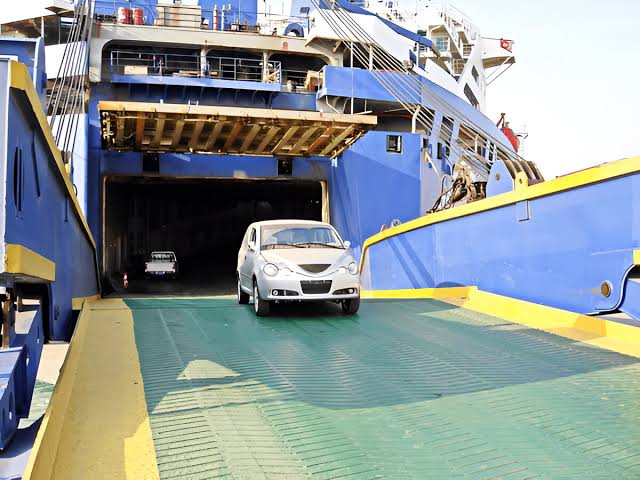
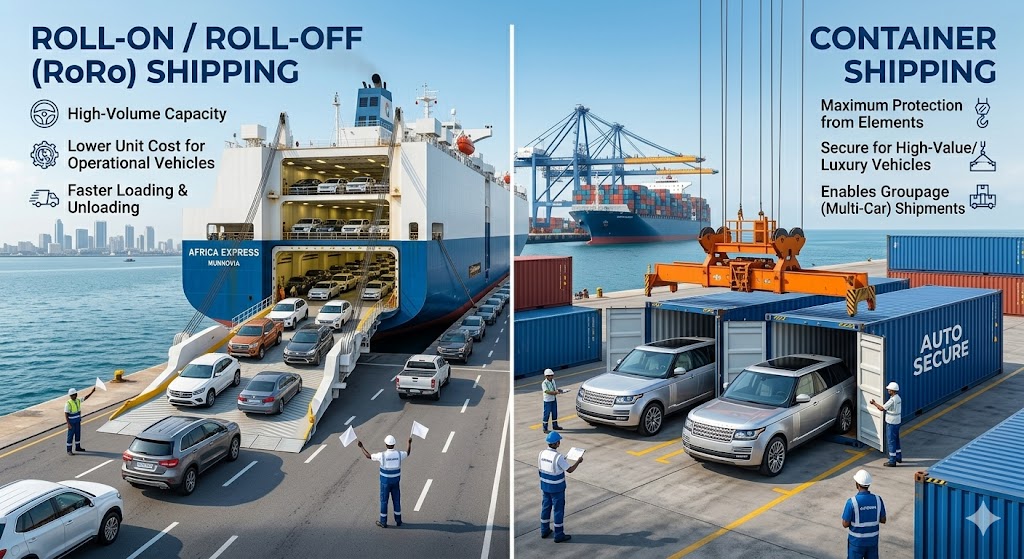
For RoRo Shipments
Your vehicle is driven off the vessel and moved to a designated area within the terminal. The terminal operator records the vehicle’s arrival and prepares it for customs inspection.
Typical processing time: 3 to 7 days
For Container Shipments
Your container is lifted off the vessel by crane and moved to the container yard. The container must be located, and in some cases, destuffed (the vehicle removed from the container) before customs inspection.
Typical processing time: 5 to 10 days
Timeline Factors
| Factor | Impact |
|---|---|
| Terminal efficiency (varies by operator) | Significant variation |
| Volume of cargo on the same vessel | Higher volume = longer processing |
| Weekend or public holiday | Delays of 1–3 days |
Stage 8: Customs Clearance (7–21 Days)
Customs clearance is often the most unpredictable stage of the import timeline. While the theoretical process is straightforward, real-world delays are common.
Activities in This Stage
- Submission of Form M and PAAR (should be completed before vessel arrival)
- Customs valuation assessment
- Payment of import duties and levies
- Physical examination of the vehicle (if selected)
- Issuance of Customs Duty Payment Receipt
- Release of vehicle from customs control
Timeline Factors
| Scenario | Typical Time |
|---|---|
| Complete documentation, no examination | 5–7 days |
| Complete documentation, random examination | 7–12 days |
| Documentation discrepancies | 10–21 days |
| Valuation dispute | 14–30 days |
| Peak season (December–February, August–October) | Longer processing times |
How to Avoid Customs Delays
- Open Form M before the vessel departs the US port. This is non-negotiable.
- Ensure all documents are consistent. The chassis number, vehicle model, and your name must match exactly across all paperwork.
- Declare the true transaction value. Under-declaration invites examination and penalties.
- Work with a licensed clearing agent. Experienced agents know which officers to approach and how to resolve discrepancies efficiently.
Autoriva’s clearing team manages the entire customs process, ensuring that documentation is complete and that any examination requests are handled promptly.
Stage 9: Port Delivery and Transportation (2–5 Days)
After customs clearance, your vehicle is physically released from the port. It must now be moved to your preferred location in Lagos, Abuja, Port Harcourt, or another Nigerian city.
Activities in This Stage
- Obtaining the gate pass from the terminal operator
- Paying terminal handling charges (if not already paid)
- Arranging a car hauler or driving the vehicle out of the port
- Transport to your residence or showroom
- Vehicle handover
Timeline Factors
| Destination | Transport Time |
|---|---|
| Within Lagos (Apapa to Lekki, Ikeja, etc.) | 1–2 days |
| Abuja | 2–4 days (via car hauler) |
| Port Harcourt | 2–3 days |
| Kano or other northern cities | 4–7 days |
Note on Driving from Apapa
Some importers choose to drive their vehicles directly from the port to their destination. This is possible but requires that:
- The vehicle is in roadworthy condition (battery, tyres, fluids)
- You have temporary movement documents (if registration is not yet complete)
- You are prepared for potential police checks
Most importers prefer car hauler transport for safety and convenience, particularly for longer distances.
Stage 10: Vehicle Registration (7–21 Days)
Your vehicle has arrived. It has been cleared by customs. It is now physically in your possession. However, it is not yet legal to drive on Nigerian roads without registration.
Refer to our detailed guide on how to register a tokunbo car in Nigeria for complete step-by-step instructions.
Activities in This Stage
- Vehicle inspection at a licensed VIS centre
- Obtaining Customs Form C250 (Proof of Ownership)
- Registration with FRSC or state licensing authority
- Number plate issuance
- Vehicle license (annual road worthiness)
Timeline Factors
| Scenario | Typical Time |
|---|---|
| Complete documents, no delays | 7–10 days |
| Discrepancies requiring correction | 14–21 days |
| Lagos (longer queues) | 10–14 days |
| Abuja (shorter queues) | 7–10 days |
How to Minimise Registration Time
- Begin the registration process within 2 weeks of receiving your vehicle
- Ensure all import documents (C250, duty receipt, Bill of Lading) are ready
- Use a licensed agent or service provider like Autoriva for registration assistance
Seasonal Factors That Affect Import Timelines
The time of year you import your vehicle significantly affects the overall timeline. Understanding seasonal patterns helps you plan.
Peak Seasons (Longer Timelines)
| Season | Period | Impact |
|---|---|---|
| Pre-Christmas imports | September–November | High volume, port congestion, customs backlogs |
| Post-New Year imports | January–March | Another peak period as buyers use new budgets |
| Summer (US ports) | June–August | Hurricane season can delay ocean transit |
Off-Peak Seasons (Shorter Timelines)
| Season | Period | Advantage |
|---|---|---|
| Late winter to early spring | February–April | Moderate volumes |
| Late spring | May–June | Generally good conditions before hurricane season |
Professional Recommendation
If your timeline is flexible, consider avoiding the September-to-November peak. Importing between February and May often results in shorter waiting times at both US and Nigerian ports.
Factors That Can Extend Your Timeline Unexpectedly
Even with perfect planning, unexpected delays occur. Being aware of these possibilities helps you manage expectations.
Title Issues in the United States
As noted earlier, if the auction house does not have the physical title, obtaining it from the state DMV can add 2 to 4 weeks.
Mitigation: Verify title status before bidding. Autoriva performs this check as standard practice.
US Port Strikes or Labour Shortages
Labour actions at US ports, while rare, cause significant delays when they occur. The International Longshoremen’s Association (ILA) represents dockworkers at East Coast and Gulf Coast ports.
Mitigation: No direct mitigation. Maintain flexibility in your timeline.
Nigerian Customs Valuation Disputes
If Customs disagrees with your declared vehicle value, the valuation process can add 1 to 3 weeks.
Mitigation: Declare the true transaction value. If you believe Customs has overvalued your vehicle, work with an experienced agent to present supporting evidence.
Nigerian Public Holidays
Government offices, including Customs and FRSC, close on public holidays. Major holidays that affect timelines include:
- New Year’s Day (1 January)
- Good Friday and Easter Monday (March or April)
- Workers’ Day (1 May)
- Democracy Day (12 June)
- Eid al-Fitr and Eid al-Adha (dates vary, 1–2 days each)
- Independence Day (1 October)
- Christmas and Boxing Day (25–26 December)
Impact: Each holiday adds 1 to 3 days to the timeline, depending on proximity to weekends.
Vehicle Damage During Transit
While rare, vehicles can be damaged during ocean transit—particularly in RoRo shipments where vehicles are driven on and off the vessel. If damage is reported at discharge, a survey may be required, adding 1 to 2 weeks.
Mitigation: Ensure you have adequate marine insurance. Autoriva can advise on insurance options.
Comparative Timelines by Origin Country
While this guide focuses primarily on imports from the United States (the most common origin for Nigerian tokunbo buyers), timelines vary by origin country.
United States
| Stage | Duration |
|---|---|
| Total typical timeline | 90–120 days |
| Ocean transit (Gulf Coast) | 25–35 days |
| Ocean transit (East Coast with transshipment) | 35–50 days |
Canada
| Stage | Duration |
|---|---|
| Total typical timeline | 100–130 days |
| Additional factor | Vehicles must often be trucked to US ports (adds 5–10 days) |
United Kingdom
| Stage | Duration |
|---|---|
| Total typical timeline | 60–90 days |
| Ocean transit (UK to Nigeria) | 20–30 days |
| Advantage | Shorter ocean distance than from US |
United Arab Emirates (UAE)
| Stage | Duration |
|---|---|
| Total typical timeline | 50–80 days |
| Ocean transit (UAE to Nigeria) | 25–35 days |
| Advantage | No transshipment required on most routes |
How Autoriva Optimises Your Import Timeline
Autoriva’s end-to-end import service is designed to minimise delays at every stage of the process.
Pre-Auction Phase
- Vehicle sourcing: We help you identify vehicles with clean titles and realistic timelines
- Title verification: We confirm physical title availability before bidding
- Budget planning: We calculate total landed cost so you bid with confidence
Post-Auction Phase
- Payment coordination: We ensure prompt payment to auction houses from your domiciliary account
- Documentation management: We prepare and verify all export documents
Logistics Phase
- Freight forwarder network: We work with reliable partners who maintain vessel space
- Port selection: We advise on optimal US ports based on your vehicle’s location
- Tracking and updates: We monitor your shipment and provide regular status reports
Nigerian Phase
- Clearing agent coordination: Our licensed clearing team manages Form M, PAAR, duty payment, and examination
- Port delivery: We arrange transport from Apapa to your preferred location
- Registration assistance: We guide you through or handle the vehicle registration process
Realistic Timeline Communication
Most importantly, Autoriva provides realistic timeline estimates from the outset. We do not promise 30-day imports. We tell you what to expect, and we deliver within that framework.
Frequently Asked Questions
What is the fastest way to import a car to Nigeria?
The fastest method is RoRo shipping from a US Gulf Coast port (Houston) on a direct sailing vessel to Apapa, combined with pre-prepared documentation and an experienced clearing agent. Best-case timeline: 60 to 75 days.
Why does importing a car take so long?
The total timeline includes multiple stages: auction, payment, transport to port, port processing, ocean transit, port waiting in Lagos, discharge, customs clearance, and registration. Each stage has its own potential delays. The ocean transit alone takes 25 to 50 days.
Can I pay extra to speed up the process?
At some stages, yes. Express processing fees can reduce time at US ports and at Nigerian customs. However, ocean transit and port waiting at Apapa cannot be expedited with additional payment. Be wary of anyone promising unusually fast timelines.
How can I track my import progress?
Your Bill of Lading number allows you to track your shipment on the shipping line’s portal. Autoriva provides regular updates to clients. Refer to our detailed tracking guide for complete instructions.
What causes the longest delays in practice?
Based on real-world data, the most significant delays occur at three stages: US port processing (congestion), ocean transit transshipment, and customs clearance in Nigeria (valuation or examination issues).
Does Autoriva guarantee a specific timeline?
No. No ethical company can guarantee exact timelines for international vehicle importation due to variables outside human control (weather, port congestion, customs workload). However, Autoriva guarantees that we will manage every stage efficiently, communicate proactively about any delays, and work to resolve issues as quickly as possible.
Importing a car to Nigeria from the United States or other international markets requires patience and realistic expectations. The complete process typically takes 90 to 120 days, with best-case scenarios reaching 60 to 75 days and worst-case scenarios extending to 150 days or more.
Understanding each stage—from auction bidding to ocean transit to customs clearance to registration—allows you to plan effectively and avoid the frustration of wondering why your vehicle has not yet arrived.
The key to minimising your timeline is preparation. Complete documentation before it is needed. Work with experienced partners who understand the process. Choose shipping routes that minimise transshipment when possible. And build realistic buffers into your schedule.
For importers who prefer to delegate the complexity to professionals, Autoriva provides comprehensive import services that manage every stage. We handle the paperwork, the logistics, the tracking, the clearance, and the delivery. You receive regular updates and, ultimately, your vehicle.
Ready to import your vehicle with a partner who understands the timeline and works to minimise delays? Contact Autoriva today for a personalised consultation and timeline estimate based on your specific vehicle and preferences.