
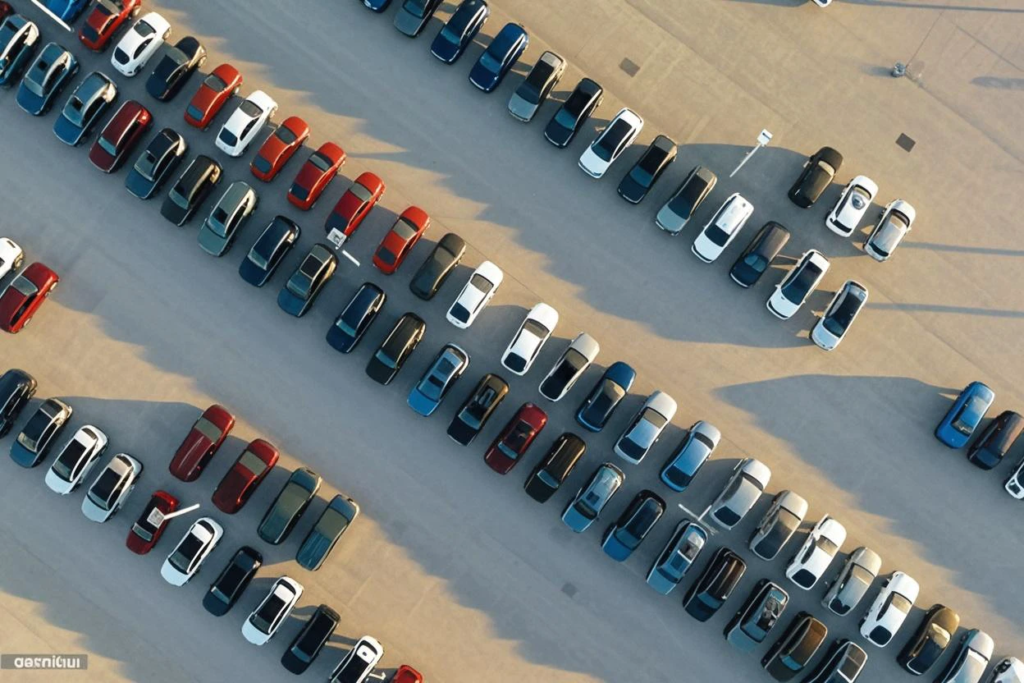
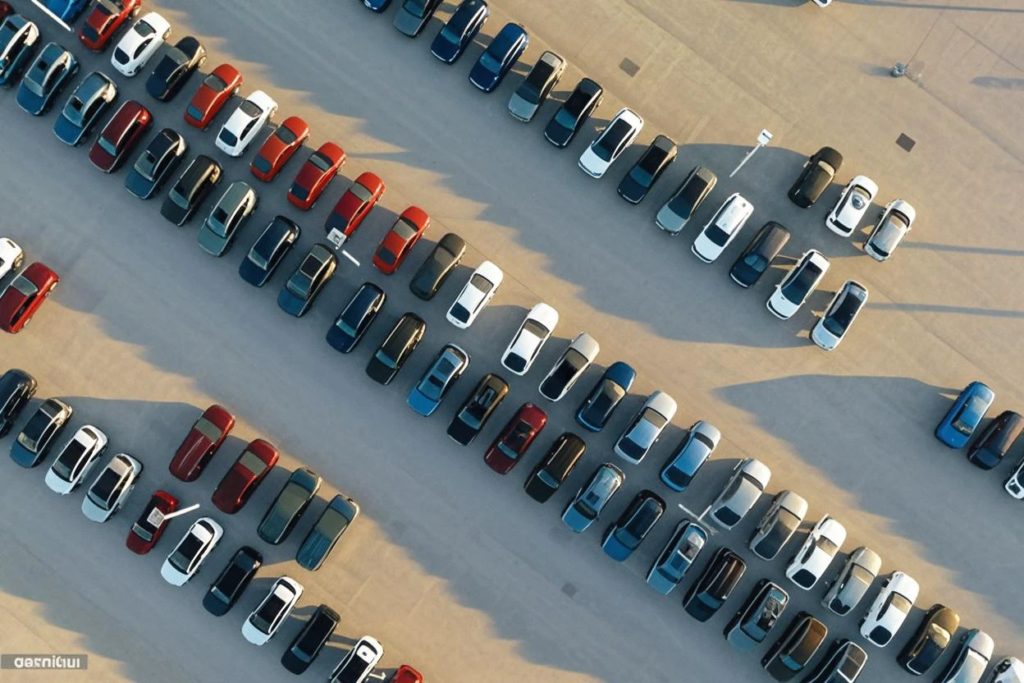
You have decided to import your first vehicle from the United States, Canada, the United Kingdom, or the United Arab Emirates. Perhaps you have seen friends or family members drive tokunbo cars that appear well-maintained and reasonably priced. Perhaps you have browsed Copart or IAAI listings and been attracted by prices that seem significantly lower than what Nigerian dealers charge.
The decision to import directly rather than buy locally can be financially rewarding. However, the path from auction listing to driving your vehicle on Nigerian roads is more complex than many first-time importers anticipate.
This guide is written specifically for the first-time importer. You will learn the complete process from start to finish, the realistic costs you should expect, the documents you must have, the timeline you should plan for, and—most importantly—the common mistakes that delay or derail first imports.
By the conclusion of this guide, you will have a clear roadmap for your import journey and a realistic understanding of whether direct importation is the right choice for your circumstances.
Is Direct Importation Right for You? An Honest Assessment
Before examining the technical details of importation, it is important to conduct an honest self-assessment. Direct importation is not the best option for every buyer.
You Are a Good Candidate for Direct Importation If:
- You have the financial capacity to pay for the vehicle, shipping, and customs duties (typically ₦15 million to ₦40 million for a mid-range sedan or SUV)
- You have the patience for a process that typically takes 90 to 120 days from auction to delivery
- You are willing to learn the process and work with verified professionals
- You have access to a domiciliary account for US dollar payments
- You can tolerate some uncertainty regarding exact delivery dates
You May Be Better Off Buying Locally If:
- You need a vehicle within 30 days
- Your budget cannot absorb unexpected delays or minor cost variations
- You do not have the time or inclination to understand the import process
- You prefer to inspect a vehicle physically before purchasing
There is no shame in choosing local purchase. Many busy professionals and first-time buyers find that paying a premium to a reputable local dealer is worth the convenience and reduced risk. However, for those willing to invest time and effort, direct importation offers significant savings and access to a wider selection of vehicles.
The Complete Import Process: A High-Level Overview
The journey from auction to Nigerian road consists of seven major phases. Each phase is examined in detail later in this guide.
| Phase | Description | Typical Duration |
|---|---|---|
| 1. Vehicle selection and bidding | Identifying a vehicle, winning the auction | 1–14 days |
| 2. Payment and documentation | Paying the auction house, obtaining title | 3–7 days |
| 3. Shipping to Nigeria | Transport to US port, ocean transit | 35–60 days |
| 4. Arrival at Apapa Port | Vessel waiting, discharge from vessel | 10–25 days |
| 5. Customs clearance | Duty assessment, payment, examination | 7–21 days |
| 6. Port delivery | Moving vehicle from port to your location | 2–5 days |
| 7. Vehicle registration | FRSC registration, number plates | 7–21 days |
Total typical timeline: 90 to 120 days from auction win to registered vehicle.
Phase 1: Vehicle Selection and Bidding
The success of your import depends heavily on the vehicle you select and the price you pay.
Choosing the Right Vehicle
Not every vehicle listed on international auctions is suitable for importation to Nigeria. Consider the following factors.
Popularity of the Model in Nigeria
Vehicles that are common on Nigerian roads—Toyota Camry, Toyota Highlander, Honda Accord, Lexus RX, Mercedes-Benz C-Class—have established parts availability and mechanics who understand them. Niche models may be difficult to service.
Title Status
The title document indicates the vehicle’s legal history. For first-time importers, the safest option is a clean title with no salvage, rebuilt, or flood branding.
| Title Type | Meaning | Suitability for First-Time Importer |
|---|---|---|
| Clean | No major damage history, never written off by insurance | Highly suitable |
| Salvage | Insurance wrote off vehicle after damage or theft | Not recommended for beginners |
| Rebuilt | Salvage vehicle repaired and recertified | Not recommended for beginners |
| Flood | Water damage (often electrical problems) | Avoid entirely |
Year of Manufacture
Nigeria Customs Service imposes restrictions on vehicles older than 15 years for certain categories. While enforcement varies, first-time importers should generally avoid vehicles older than 2010 to prevent customs complications.
Damage Reports
Copart and IAAI provide condition reports with damage descriptions. For your first import, choose vehicles with minimal or no damage. Avoid vehicles described as:
- “Engine damage” or “mechanical issues”
- “Flood” or “water damage”
- “Biohazard” or “theft recovery” (unreliable history)
- “Partial repair” (unknown quality of repairs)
Vehicle Identification Number (VIN)
Always obtain the VIN before bidding. Run a Carfax or Autocheck report to verify:
- No odometer rollback
- No undisclosed accident history
- No salvage or flood branding not mentioned in auction listing
- No stolen vehicle record
Understanding Auction Costs
The winning bid is not the final price. Auction houses add several fees.
| Fee | Typical Amount |
|---|---|
| Auction house fee | 10–20% of winning bid (varies by location and vehicle price) |
| Gate fee | $50–$150 |
| Title processing fee | $50–$100 |
| Internet bidding fee (Copart) | $100–$300 |
| Loading fee | $50–$150 |
Example: A winning bid of $5,000 may result in a final invoice of $6,200 to $6,800 after fees.
Bidding Strategies for First-Time Importers
- Set a maximum bid before the auction starts and do not exceed it.
- Calculate your total landed cost (vehicle cost + fees + shipping + duties) before bidding. A seemingly cheap vehicle may become expensive after all costs are added.
- Avoid bidding against yourself by incrementing your own bid.
- Consider using a broker who bids on your behalf and understands market values.
Autoriva provides bidding representation for clients who prefer professional assistance.
Phase 2: Payment and Documentation
After winning the auction, you must pay the auction house promptly and obtain the necessary export documents.
Making Payment
Auction houses require payment within 2 to 5 business days. You will need a domiciliary account denominated in US dollars to make the wire transfer.
Refer to our detailed guide on domiciliary accounts for complete instructions on opening and funding an account.
Obtaining the Title
The Certificate of Title (or salvage title, depending on the vehicle) is the most important document for export. The auction house will provide this after payment is confirmed.
Potential delay: If the auction house does not have the physical title in hand (common with salvage vehicles from certain states), you may wait 2 to 4 weeks for the title to arrive from the state DMV before shipping can proceed.
Other Required Documents
- Bill of Sale: Proof of purchase
- Export declaration: Filed by your freight forwarder
Phase 3: Shipping to Nigeria
With payment complete and title in hand, your vehicle is ready for shipment.
Choosing Between RoRo and Container Shipping
| Method | Cost | Protection | Transit Time | Best For |
|---|---|---|---|---|
| RoRo (Roll-on/Roll-off) | Lower | Basic | 25–50 days | Standard vehicles, budget-conscious importers |
| Container (20ft or 40ft) | Higher | Excellent | 30–55 days | Luxury vehicles, personal effects, added security |
RoRo is sufficient for most first-time importers shipping standard sedans or SUVs. Container is recommended for high-value vehicles (over $25,000) or if you wish to ship personal belongings alongside the car.
Selecting a US Port
The most common departure ports for Nigeria-bound vehicles are:
- Houston, Texas (most common, shortest ocean distance to Nigeria)
- Baltimore, Maryland (good for East Coast vehicles)
- Charleston, South Carolina (alternative East Coast port)
Vehicles located far from these ports will incur trucking fees to reach the port.
Ocean Transit Timeline
- Direct sailing (rare): 25 to 35 days
- Transshipment via Europe or North Africa: 35 to 50 days
Most shipments to Nigeria involve transshipment through hubs such as Algeciras (Spain), Tanger Med (Morocco), or Dakar (Senegal).
Tracking Your Shipment
Your freight forwarder will provide a Bill of Lading number. Use this number on the shipping line’s tracking portal to monitor your vehicle’s journey. Refer to our detailed tracking guide for complete instructions.
Phase 4: Arrival at Apapa Port
Your vessel has arrived off the coast of Lagos. Your vehicle is not yet on Nigerian soil.
Vessel Waiting Time
Apapa Port experiences chronic congestion. Vessels frequently wait at anchorage for 3 to 15 days before being allocated a berth to discharge cargo.
During peak seasons (September to November, January to March), waiting times can extend to 20 days or more.
Discharge from Vessel
Once the vessel berths, your vehicle will be unloaded.
- RoRo: Driven off the vessel and moved to a terminal holding area (3 to 7 days for processing)
- Container: Crane-lifted from the vessel to the container yard (5 to 10 days for processing)
What You Can Do
There is no action you can take to accelerate vessel waiting or discharge. This stage is entirely dependent on port operations. However, having your clearing agent prepared ensures that when the vehicle is available, clearance proceeds without additional delay.
Phase 5: Customs Clearance
Customs clearance is often the most stressful stage for first-time importers. It is also the stage where professional assistance is most valuable.
Documents Required for Clearance
| Document | When to Obtain |
|---|---|
| Bill of Lading | From your freight forwarder (after vessel departure) |
| Commercial invoice | From auction house (after winning bid) |
| Form M | Before vessel departure (critical) |
| PAAR (Pre-Arrival Assessment Report) | After Form M, before vessel arrival |
| Customs Form C250 | After vehicle arrival (obtained by clearing agent) |
Form M: The Non-Negotiable Document
Form M is a mandatory declaration required by the Central Bank of Nigeria for all physical imports. It must be opened before your vessel departs the US port.
If your vehicle arrives without a valid Form M, you cannot commence clearance. Your vehicle will remain at the port, accumulating demurrage charges, until Form M is opened and processed.
Do not rely on an agent who claims Form M can be opened after arrival. This is incorrect and will result in significant delays.
Duty Assessment and Payment
Nigeria Customs Service will assess your vehicle based on:
- The CIF value (Cost of vehicle + Insurance + Freight)
- The vehicle’s year, make, model, and engine size
Typical duty and levy rates range from 35% to 70% of the CIF value, depending on the vehicle category. Refer to our Apapa Port clearance guide for detailed examples.
Physical Examination
Customs officers may select your vehicle for physical examination. During this examination, they verify:
- Chassis number matches documentation
- Engine number matches (where visible)
- Vehicle specifications match declaration
Examination is not automatic. If your documents are complete and consistent, your vehicle may be cleared without examination. However, random examinations occur, and you should budget time for this possibility.
Working with a Licensed Clearing Agent
First-time importers should never attempt to clear a vehicle without a licensed agent. The process involves multiple government agencies (Customs, NPA, NAQS, Port Health) and proprietary systems that only licensed agents can access.
A legitimate clearing agent will:
- Have a valid CRFFN license
- Provide a written fee agreement
- Give you a Customs Duty Payment Receipt after payment
- Not promise to “avoid” or “reduce” lawful duties
Autoriva maintains relationships with vetted, licensed clearing agents who manage clearance on behalf of our clients.
Phase 6: Port Delivery
After customs clearance, your vehicle is released from Customs control. It must still be moved out of the port physically.
Terminal Handling Charges
The terminal operator charges fees for moving your vehicle from the discharge area to the exit gate. These fees are typically ₦50,000 to ₦200,000, depending on the terminal and vehicle type.
Gate Pass and Exit
Your clearing agent will obtain a gate pass from the terminal operator. With the gate pass and customs release documents, your vehicle can drive out of the port.
Transport to Your Location
You have two options for moving your vehicle from Apapa to your home or office:
- Drive yourself: The most economical option, but requires the vehicle to be roadworthy (battery charged, tyres inflated, fluids checked)
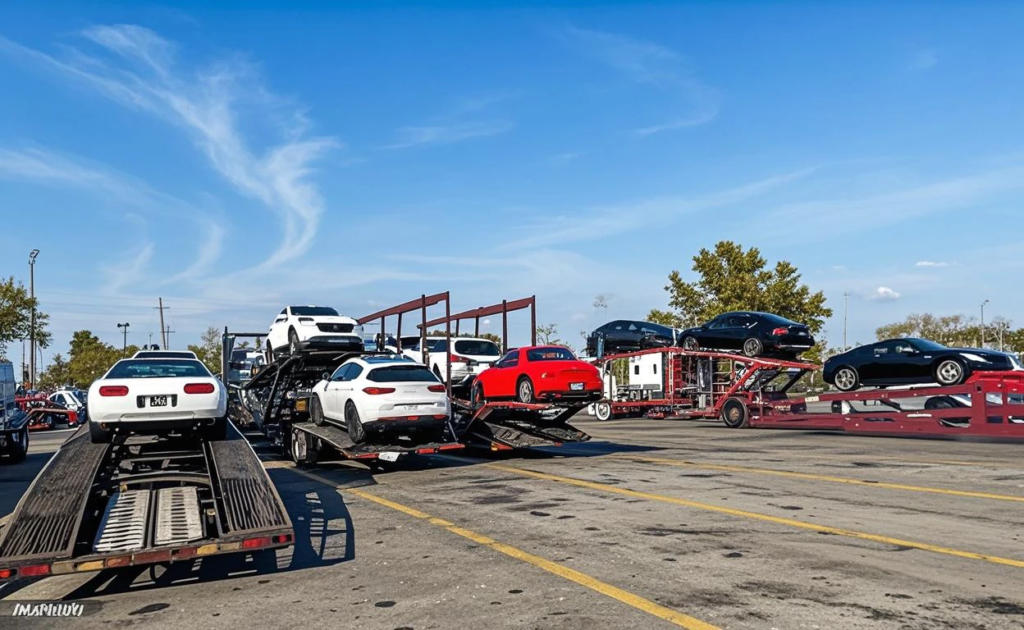
- Car hauler: Professional transport on a flatbed truck. Recommended for longer distances or if the vehicle is not roadworthy
Transport times from Apapa:
| Destination | Car Hauler Time | Driving Time |
|---|---|---|
| Lekki, Lagos | 1 day | 2–4 hours |
| Ikeja, Lagos | 1 day | 2–3 hours |
| Abuja | 2–4 days | 2–3 days of driving |
| Port Harcourt | 2–3 days | 1–2 days of driving |
Phase 7: Vehicle Registration
Your vehicle is now physically in your possession. However, it is not yet legal to drive on Nigerian roads without registration.
Registration Steps (Summary)
- Vehicle inspection at VIS centre (verify chassis number, roadworthiness)
- Obtain Customs Form C250 (Proof of Ownership Certificate)
- Submit documents to FRSC or state licensing authority
- Receive number plates and registration certificate
- Obtain vehicle license (annual road worthiness)
Timeline for Registration
With complete documents, registration takes 7 to 21 days. Lagos typically takes longer (10–14 days) due to higher volume. Abuja is often faster (7–10 days).
Refer to our detailed registration guide for complete step-by-step instructions.
Total Landed Cost: A Realistic Example
Understanding the full cost of importation is essential before you bid. Below is a realistic example for a 2017 Toyota Highlander purchased from Copart.
| Cost Component | Amount (USD) | Amount (₦ at ₦1,500/USD) |
|---|---|---|
| Winning bid | $6,000 | ₦9,000,000 |
| Auction fees (15% approx.) | $900 | ₦1,350,000 |
| Transport to US port | $400 | ₦600,000 |
| Shipping and insurance | $2,500 | ₦3,750,000 |
| CIF Value (Customs basis) | $9,800 | ₦14,700,000 |
| Import duty (35% of CIF) | ₦5,145,000 | |
| Levy (35% of CIF, on some vehicles) | ₦5,145,000 | |
| Customs processing (1%) | ₦147,000 | |
| Terminal handling | ₦150,000 | |
| Clearing agent fees | ₦300,000 | |
| Registration fees | ₦100,000 | |
| Total Landed Cost | Approx ₦28–30 million |
Note: A similar vehicle purchased from a Nigerian dealer might cost ₦32 million to ₦38 million. Direct importation saves ₦4 million to ₦8 million, but requires patience and work.
Critical Mistakes First-Time Importers Make
Avoiding these common errors will save you significant time, money, and frustration.
Mistake 1: Failing to Open Form M Before Vessel Departure
This is the most expensive mistake a first-time importer can make. Without Form M, your vehicle cannot be cleared. You will pay demurrage charges (₦30,000 to ₦100,000 per day) while waiting for Form M to be processed.
Solution: Open Form M as soon as your vehicle is booked on a vessel. Autoriva handles Form M preparation for our clients.
Mistake 2: Underestimating Total Landed Cost
Many first-time importers calculate only the auction price and shipping. They are shocked when customs duties add 50% to 70% of the CIF value.
Solution: Calculate your total landed cost before bidding. Include duties, levies, agent fees, terminal charges, and registration. If the total does not represent a meaningful saving over local purchase, reconsider the import.
Mistake 3: Choosing an Unverified Agent
The agent who offers the lowest fees is rarely the best choice. Unverified agents may delay your clearance, charge unexpected fees, or disappear entirely.
Solution: Verify CRFFN registration. Request references. Insist on a written agreement. Work with established companies like Autoriva rather than individuals operating without infrastructure.
Mistake 4: Bidding on a Vehicle with Title Problems
Salvage, rebuilt, and flood titles carry risks that first-time importers may not understand. A salvage vehicle may have frame damage that is not visible in photos. A flood vehicle may develop electrical problems after arrival in Nigeria’s humid climate.
Solution: For your first import, restrict your search to clean titles only. Run a Carfax report on any vehicle you seriously consider.
Mistake 5: Ignoring Port Congestion in Timeline Planning
First-time importers often expect their vehicle to arrive 30 days after purchase. When the vehicle takes 90 days, they become frustrated and may make poor decisions.
Solution: Plan for 90 to 120 days. If your vehicle arrives earlier, you are pleasantly surprised. If it arrives on schedule, you are not disappointed.
Should You Use a Professional Import Service?
Given the complexity of the process, many first-time importers choose to work with a professional service rather than managing everything independently.
Tasks You Must Manage If Importing Independently
- Finding and evaluating vehicles
- Bidding at auctions
- Arranging payment in US dollars
- Transport to US port
- Selecting and booking a freight forwarder
- Opening Form M
- Tracking the shipment
- Engaging a clearing agent at Apapa
- Managing customs clearance
- Arranging port delivery
- Completing registration
Tasks a Professional Service Handles
A full-service provider like Autoriva manages all of the above on your behalf. You specify your vehicle preferences and budget. We:
- Source suitable vehicles
- Bid within your budget
- Manage payment and documentation
- Coordinate shipping and tracking
- Handle Form M and customs clearance
- Arrange delivery to your location
- Assist with registration
Cost-Benefit Analysis
| Factor | Independent Import | Professional Service |
|---|---|---|
| Potential savings | Higher (no service fee) | Lower (service fee applies) |
| Time investment | Significant (dozens of hours) | Minimal (few hours total) |
| Risk of error | Higher (first-time mistakes) | Lower (experienced team) |
| Stress level | High (managing every stage) | Low (regular updates, no firefighting) |
For many first-time importers, the service fee is justified by the reduced risk, saved time, and peace of mind.
How Autoriva Helps First-Time Importers
Autoriva was founded to address exactly the challenges first-time importers face. Our service is designed for buyers who want the savings of direct importation without the complexity and risk.
Our Services for First-Time Importers
- Vehicle sourcing: We identify clean-title vehicles that match your budget and preferences
- Bidding representation: We bid on your behalf at Copart, IAAI, Manheim, and other auctions
- Payment coordination: We help you navigate domiciliary account payments to auction houses
- Shipping management: We coordinate transport to US port and book vessel space with reliable freight forwarders
- Form M and documentation: We prepare and submit all required documents before your vessel departs
- Tracking and updates: You receive regular status reports throughout the journey
- Customs clearance: Our licensed clearing agents manage the entire Apapa Port clearance process
- Delivery: We arrange transport from Apapa to your home or office
- Registration assistance: We guide you through or handle vehicle registration
What We Do Not Do
- We do not open domiciliary accounts for clients (you must do this at your bank)
- We do not provide loans or financing (payment must be made in full at time of purchase)
- We do not guarantee specific timelines (but we provide realistic estimates and work to minimise delays)
Our Commitment to First-Time Importers
We understand that your first import is a significant financial decision. We treat your investment with the care it deserves. Our team is available to answer questions at every stage, and we provide transparent pricing with no hidden fees.
Frequently Asked Questions for First-Time Importers
How much money do I need to start?
For a standard sedan or SUV, budget at least ₦20 million to ₦35 million for the complete landed cost. You should have this amount available in your domiciliary account (for US dollar payments) and naira account (for customs duties and local fees).
Can I import a car with a salvage title?
Technically, yes. Salvage vehicles can be imported and registered in Nigeria. However, we do not recommend salvage vehicles for first-time importers. The risk of hidden damage, repair costs, and customs complications is significantly higher than with clean-title vehicles.
How do I find a trustworthy clearing agent?
Verify CRFFN registration. Request references from past clients. Insist on a written agreement. Consider working with Autoriva, who maintains relationships with vetted, licensed clearing agents.
What happens if my vehicle is damaged during shipping?
You should have marine insurance that covers damage during ocean transit. Your freight forwarder can arrange insurance, or you can purchase independently. Autoriva advises clients on appropriate insurance coverage.
Can I track my vehicle in real time?
You can track the vessel or container using the Bill of Lading number on the shipping line’s portal. Marine traffic websites show vessel positions. However, there is no real-time GPS tracking for the vehicle itself unless you install a device (generally not permitted).
Why is my vehicle taking longer than I expected?
Common causes of delay include: US port congestion, transshipment waiting times, Apapa Port congestion, customs examination, and documentation discrepancies. Most delays are not within your control. Patience is essential.
Is importing a car always cheaper than buying locally?
Not always. For lower-value vehicles (under ₦15 million landed cost), the savings may be modest after accounting for shipping, duties, and fees. For higher-value vehicles, savings are more substantial. Calculate total landed cost before deciding.
Conclusion
Importing your first vehicle into Nigeria is a significant undertaking, but it is entirely achievable with proper preparation and realistic expectations.
The process takes 90 to 120 days from auction to registration. Total landed cost typically ranges from ₦20 million to ₦40 million, depending on the vehicle. You will need a domiciliary account, a registered clearing agent, and patience for the inevitable delays.
The most important decision you will make is not which vehicle to buy, but which partners to trust. A reliable freight forwarder, a licensed clearing agent, and—if you choose—a professional import service determine whether your experience is smooth or stressful.
Autoriva exists to make the import process accessible to first-time buyers. We handle the complexity so you can focus on selecting your vehicle and anticipating its arrival.
Ready to start your first import with confidence? Contact Autoriva today. We will walk you through the process, answer all your questions, and provide a transparent quote for our services. Your tokunbo vehicle is closer than you think.