You have seen them on Nigerian roads—the pristine Tokunbo SUVs and luxury sedans that look brand new yet cost significantly less than dealership prices. The secret? Many were sourced from US online vehicle auctions like Copart and IAAI, where prices are often 30% to 60% cheaper than the local market .
Nigeria remains one of Africa’s largest vehicle import markets, with many buyers sourcing from the United States because of better maintenance history, wider selection, competitive auction prices, and access to newer vehicle models .
However, buying a vehicle from a US auction is only part of the process. Successfully exporting the vehicle, complying with US export regulations, arranging ocean freight, managing documentation, navigating Nigerian Customs requirements, and ensuring final delivery requires careful planning and professional expertise .
This guide provides a comprehensive roadmap for buying a car online in the USA and exporting it to Nigeria in 2026. You will learn how to find the right vehicle, understand US auction platforms, navigate the bidding process, arrange shipping, and clear your vehicle through Nigerian Customs.
Part 1: Understanding US Vehicle Auction Platforms
Copart USA
Copart USA is one of the world’s largest online vehicle auction marketplaces. The platform offers access to vehicles sourced from insurance companies, banks, fleet operators, rental companies, dealerships, and private sellers .
What you can find on Copart:
- Salvage vehicles (insurance write-offs)
- Clean title vehicles (no major damage history)
- Fleet and rental vehicles
- Luxury brands (Mercedes-Benz, BMW, Lexus)
- SUVs, sedans, trucks, and motorcycles
Why Nigerian buyers prefer Copart:
- Better vehicle maintenance history
- Wider vehicle selection
- Competitive auction prices
- Access to newer vehicle models
- Verified vehicle history records
IAAI (Insurance Auto Auctions)
IAAI is another major auction platform, processing approximately 2.5 million vehicles annually with a focus on insurance-sourced vehicles .
Key differences from Copart:
- More focused inventory from insurance companies
- Consistent condition reporting
- Strong selection of repairable luxury vehicles
Manheim and Dealer-Only Auctions
Manheim runs the largest dealer-only wholesale auction network, weighted toward clean-title, running vehicles. These platforms require a dealer license or broker access .
The Broker Solution
Copart, IAAI, and Manheim are not fully open to the public. Most listings require a registered dealer or broker account. Rather than chasing a personal license, the common route is to bid through a US-licensed dealer or export broker who already holds platform access, wins the unit on your behalf, and hands off a verifiable title and invoice .
Why Nigerian buyers use brokers:
- Solve the payment problem (third-party payments accepted)
- Access dealer-only inventory
- Handle shipping coordination
- Eliminate the need for US dealer license
Using a broker also meant one could bid on any vehicle (including those restricted to business license holders) .
Part 2: Understanding Vehicle Titles — The Most Critical Document
One of the biggest mistakes buyers make is misunderstanding vehicle titles . The Title determines if the vehicle can legally leave a US port, if it can be cleared through customs in Nigeria, and if the purchase is financially sensible.
Exportable Title Types
Title Types to Avoid Completely
| Title Type | Why It’s a Problem |
|---|---|
| Bill of Sale (BOS) | Sales receipt, not a certificate — cannot be used for export |
| Junk Receipt/Junk Certificate | Disposal certificate — vehicle cannot be registered |
| Parts Only | For parts only — not roadworthy |
| No Title Letter | No certificate available — export impossible |
Do not buy a “Bill of Sale” vehicle if you intend to ship it out of the US .
Part 3: Registration and Membership Options
Copart Membership
| Membership Type | Annual Fee | Bid Limit | Deposit |
|---|---|---|---|
| Basic | $99 | $2,000 | 10% above limit |
| Premier | $249 | Higher | $400 refundable |
IAAI Membership
IAAI membership costs $200 a year for both individual and business accounts .
Reneging Penalties
Critical warning: If you win a bid and fail to complete payment, penalties apply:
- IAAI: $1,000 or 15% of sale price, whichever is greater
- Copart: 10% of final sale price or $600 — whichever is higher
Never bid unless you are certain you can complete the purchase.
Account Types
While some types of cars cannot be bought by an individual license holder, business accounts have access to and can buy all vehicles. This is also mostly determined by states, as some require having a business license and a solution to this is through brokers .
Part 4: The Bidding Process
Identifying Your Vehicle
Search for vehicles based on:
- Make and model
- Year
- Mileage
- Title status
- Vehicle condition
- Location
Carefully review auction photos, damage reports, vehicle descriptions, VIN, and title information .
Calculating Your Maximum Bid
A vehicle that appears inexpensive at auction may become expensive after all associated costs are included .
Successful buyers:
- Set a maximum budget
- Factor in auction fees
- Consider transportation costs
- Include export costs
- Calculate shipping charges
- Estimate Nigerian duties and taxes
Budget expectation tip: A simple guide is to check the current selling price of the same vehicle in Nigeria and subtract about ₦2,000,000. The remaining amount should cover the vehicle purchase, auction fees, inland transport, shipping, and clearing .
Using a Broker for Bidding
When using a secondary auction provider like Auto Auction Mall, the process typically involves:
- Registering on the broker’s website
- Paying a bidding deposit (typically $600)
- Specifying your maximum bid
- The broker bids on your behalf
- If you win, the broker handles payment and documentation
The process was followed via Skype where AAM representatives shared their screen and one indicated if they should bid at a certain price or not. Other buyers may not attend the auction but simply indicate the maximum amount they were willing to spend .
The “Buy Now” Option
Some vehicles are available under what is called “buy now,” which meant one could buy at the listed price without waiting for it to go on a live auction .
Important note: The final price could be lower than listed or it could be higher, it all depends on how “bad” those jostling for it really wanted that car .
Part 5: Payment — The Nigerian Challenge
The Payment Problem
On Copart, payment—especially through wire transfer which is the standard for international buyers—could only be made directly from an account bearing the same name as what you used to register on the platform .
The problem here was getting dollars out of Nigeria. If one applied for a Form M and the money was not processed within eight days, then the deposit of $600 dollars would be forfeited .
The Broker Solution
Using a secondary auction provider solves the payment problem because third-party payments are accepted. There is also a provision by some companies’ Lagos offices to help buyers source dollar payments in the US, eliminating the challenge of being unable to send from Nigeria or finding someone in the US to make the payment .
Dollar Card for Deposits
The $600 deposit can be paid using a Dollar card, or through naira-dollar arrangements some Lagos offices facilitate. However, the dollar card option is not accepted for complete car payments as it is described as an unsecured form of payment prone to disputes .
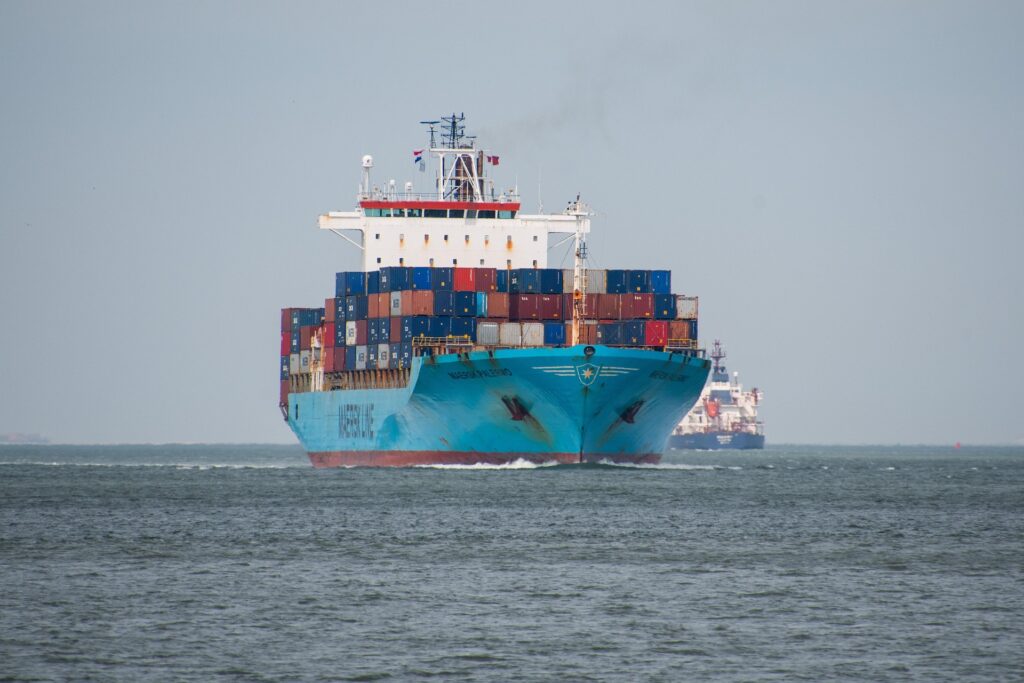
Part 6: Shipping from the USA to Nigeria
Shipping Methods
RoRo (Roll-on/Roll-off) Shipping
RoRo remains one of the most cost-effective methods for shipping operational vehicles .
Benefits:
- Competitive pricing
- Faster loading process
- Lower handling risk
- Efficient transit times
Requirements:
- Vehicle must be operable (able to start, steer, brake, and roll)
- No personal items inside
- Proper documentation complete
Cost range: $1,200 – $2,800 depending on vehicle size
Leading RoRo carriers serving Nigeria: Grimaldi Lines, Höegh Autoliners
Container Shipping
Container shipping may be preferred for:
Benefits:
- Enhanced security
- Reduced exposure to weather conditions
- Flexibility for mixed cargo
Cost range: $2,500 – $6,500 depending on container size
US Ports for Export
Major US ports for shipping vehicles to Nigeria include:
Port choice affects cost, timeline, and risk. A short domestic tow to one US port may look convenient, but if that port has fewer sailings, a stricter document process, or higher terminal costs, another gateway may be better .
Nigerian Ports
Most vehicles discharge at:
- Tin Can Island Port (PTML terminal) — Specialized RoRo and automotive terminal, the largest dedicated RoRo terminal in West Africa
- Apapa Port — Nigeria’s oldest and largest port, handles containerized vehicle imports
Shipping Timeline
Shipping from the USA to Nigeria typically takes 4 to 8 weeks . With a professional partner, the complete import timeline from auction win to Nigerian delivery is typically 60–120 days.
Inland Transport from Auction Yard
Once you win an auction, the clock starts. Auction yards charge daily storage, so the gap between payment and pickup is where avoidable cost lives . Storage fees of $50 per day apply after 3 days, which could accumulate very quickly .
Part 7: Required Documentation
US Export Document Set
For US vehicle exports, the forwarder or exporter will typically need :
| Document | Purpose |
|---|---|
| Original title or certified title copy | Proves ownership for export review |
| Bill of sale or commercial invoice | Supports value and destination clearance |
| VIN, year, make, model | Needed for AES, booking, and customs |
| Export Power of Attorney | Allows forwarder/agent to act on your behalf |
| AES ITN or exemption citation | Required for US Customs export reporting |
| Bill of lading | Transport contract — confirm consignee details |
| Condition report and photos | Supports claims and reduces disputes |
US Customs and Border Protection requires used self-propelled vehicles to go through a vehicle export document review before export. CBP generally requires the ownership documents to be submitted at the port of export at least 72 hours before export .
Nigeria Import Document Set
The Nigerian consignee or clearing agent should confirm the current destination requirements before the car sails. Common documents include :
| Document | Purpose |
|---|---|
| Bill of Lading (original or telex release) | Proof of shipment |
| Commercial invoice | Vehicle value and purchase proof |
| Vehicle title copy | Ownership details |
| Form M | Mandatory import declaration — must be opened before vessel departure |
| PAAR (Pre-Arrival Assessment Report) | Sets official duty to be paid |
| Importer Tax Identification Number | For customs clearance |
| Insurance certificate | Marine cargo insurance |
Form M — The Most Critical Document
Form M is a mandatory import declaration required by the Central Bank of Nigeria for all physical imports. It must be opened before your vessel departs the port of origin.
If you apply for a Form M and the money is not processed within eight days, the deposit of $600 dollars would be forfeited . An expired or unapproved Form M when the ship docks is one of the most common causes of multi-week delays and demurrage .
Part 8: Nigerian Customs Duty and Clearance
The 2026 Duty Structure
Under Nigeria’s updated customs framework for 2026, the official charges for clearing imported vehicles include :
| Charge Type | 2026 Rate | Calculated On |
|---|---|---|
| Import Duty | 20% | CIF Value |
| NAC Levy (used cars) | 15% | CIF Value |
| VAT | 7.5% | CIF + Duties + Levies |
| Surcharge | 7% | Import Duty amount |
| ETLS | 0.5% | CIF Value |
| FOB Levy | 4% | FOB Value |
How Duty Is Calculated
Duty is not charged on what you paid at auction. The Nigeria Customs Service assesses a CIF value (Cost, Insurance, Freight) using its own database value for the year, make, and model, and that assessed figure is usually higher than the auction invoice .
A cheap auction price does not translate into a cheap clearance — Customs values the vehicle on its own assessed market figure, not the hammer price .
Customs valuation is usually higher than the auction invoice.
The Age Limit
Nigeria restricts the import of older used vehicles. The widely enforced standard bars used cars beyond roughly twelve years from their year of manufacture .
Important: Customs reads the year of manufacture stamped on the VIN plate, not the marketing model year, so a vehicle sold as a later model year can still fail if its build date is older .
Recommendation: Confirm the current eligible year with the Nigeria Customs Service before you place a bid — not after the unit is on the water.
Vehicle Age Limit
Nigeria restricts import of vehicles older than 12 years . Vehicles older than this are effectively barred.
Part 9: The Complete Step-by-Step Process
Step 1: Identify Your Vehicle
Search on Copart or IAAI for vehicles that match your budget and preferences.
Step 2: Understand the Title
Verify the title type — Clean, Salvage, Rebuildable, or Certificate of Destruction.
Step 3: Register or Engage a Broker
Register on the auction platform or engage a US-licensed broker who can bid on your behalf.
Step 4: Set Your Maximum Bid
Calculate your maximum bid based on total landed cost.
Step 5: Bid
Place your bid through the auction platform or your broker. “The final price could be lower than listed or it could be higher, it all depends on how ‘bad’ those jostling for it really wanted that car” .
Step 6: Pay
Complete payment promptly. Using a broker solves the payment problem from Nigeria.
Step 7: Arrange Pickup
Arrange pickup from the auction yard within 3 days to avoid storage fees.
Step 8: Arrange Shipping
Choose RoRo or container shipping depending on vehicle condition and value.
Step 9: Export Documentation
Ensure all export documents are prepared correctly.
Step 10: Ocean Transit
The vessel sails to Lagos — typically 4-8 weeks.
Step 11: Nigerian Customs Clearance
Work with a licensed clearing agent to clear the vehicle through Customs.
Step 12: Vehicle Registration
Register with the FRSC and obtain number plates.
Frequently Asked Questions
Can I buy a car from Copart and ship it to Nigeria?
Yes. Copart is one of the most trusted vehicle auction marketplaces, offering access to thousands of cars at competitive prices .
Do I need a dealer license to buy from Copart?
Not necessarily. While many listings require a registered dealer or broker account, you can bid through a US-licensed broker who holds platform access and wins on your behalf .
How much does it cost to ship a car from the USA to Nigeria?
RoRo shipping typically costs $1,200–$2,800, while container shipping costs $2,500–$6,500 depending on vehicle size and container type .
What is the age limit for importing cars into Nigeria?
The widely enforced standard bars used cars beyond roughly twelve years from their year of manufacture .
What is a Certificate of Destruction title?
A Certificate of Destruction indicates the vehicle is not eligible for US registration but does permit export to international destinations such as Nigeria .
How long does it take to ship a car from the USA to Nigeria?
Shipping typically takes 4 to 8 weeks. Complete import timeline from auction win to Nigerian delivery is 60–120 days .
What is Form M and why is it important?
Form M is a mandatory import declaration that must be opened before your vessel departs the US port .
Can I pay for a Copart car from Nigeria?
Yes, but payment is challenging. Using a secondary auction provider (broker) solves the payment problem because third-party payments are accepted .
How much customs duty will I pay on an imported car?
Total duty on used passenger vehicles is approximately 42–45% of CIF value, including Import Duty (20%), NAC Levy (15%), VAT (7.5%), and other charges .
Does Autoriva help with car importation?
Yes. AutoRiva Africa provides comprehensive import services, including vehicle sourcing, bidding, shipping coordination, customs clearance, and delivery.
Conclusion
Buying a car online in the USA and exporting it to Nigeria requires careful planning, understanding of auction platforms, and navigation of complex logistics and customs requirements.
Key Takeaways
- Understand the platform: Copart and IAAI offer access to thousands of vehicles at competitive prices
- Know your titles: Clean and Salvage titles are exportable; Bill of Sale and Junk titles are not
- Use a broker: Brokers solve payment and licensing challenges for Nigerian buyers
- Calculate total landed cost: The winning bid is only the beginning
- Open Form M before vessel departure: This is non-negotiable
- Understand customs duty: Total duty is approximately 42–45% of CIF value
- Check the age limit: Vehicles older than 12 years are generally prohibited
For importers who prefer professional guidance through the entire process, AutoRiva Africa provides comprehensive import services—from vehicle sourcing and VIN verification to bidding, shipping coordination, customs clearance, and delivery.
Ready to import your car from the USA? Contact AutoRiva Africa today for a personalized consultation and landed cost estimate.